
Martia
Ragonot, 1887
Species Guides
1- Martia arizonella(snout moth)
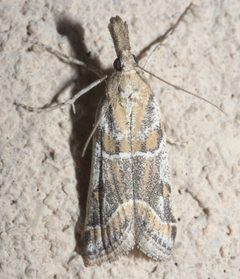
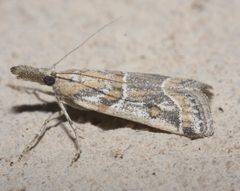
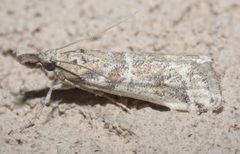
Martia is a of snout moths (Pyralidae: Phycitinae) established by Émile Louis Ragonot in 1887. The genus contains a single , Martia arizonella, also described by Ragonot in the same publication. This North American is found in arid and semi-arid regions of the western United States.
Pronunciation
How to pronounce Martia: /ˈmarti.a/
These audio files are automatically generated. While they are not always 100% accurate, they are a good starting point.
Identification
As a , Martia is currently represented only by Martia arizonella. Identification to genus level requires examination of genitalic and wing venation patterns characteristic of the Phycitinae . The single can be distinguished from other Phycitinae by the combination of its geographic range and the specific pattern elements described in the original description.
Images
Habitat
The sole Martia arizonella occurs in arid and semi-arid regions, specifically in areas of California, Arizona, Colorado, and Utah.
Distribution
Western North America, including the states of California, Arizona, Colorado, and Utah.
Similar Taxa
- Other Phycitinae generaSimilar wing patterns and body form; distinguished by genitalic , wing venation, and geographic distribution.
More Details
Taxonomic history
Both the Martia and its sole Martia arizonella were described simultaneously by Émile Louis Ragonot in 1887. The genus has remained since its establishment.
Etymology
The name Martia does not appear to have an explicitly documented etymology in the original description. It is not related to the Roman legion 'Legio IV Martia' or other uses of the name Martia in different contexts.
Sources and further reading
- BugGuide
- Wikipedia
- iNaturalist taxon
- Catalogue of Life
- Life on Mars? Lichens survive Martian simulation
- New bush tomato species is the link between botany and an Oscar-nominated Hollywood movie | Blog
- Lichens on Mars! (sort of) | Blog
- tomato | Blog
- NewSpecies | Blog
- algae | Blog
- Population Structure and Reproduction of the Deep-Water Shrimp Plesionika Martia (Decapoda: Pandalidae) from the Eastern Ionian Sea
- Aspects of biology of the deep-water pandalid shrimp Plesionika martia (A. Milne-Edwards, 1883) from Sığacık Bay (eastern Mediterranean)