
Reynosa floscella
Hulst, 1890
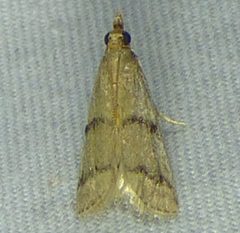
Reynosa floscella is a of snout moth in the Pyralidae, Phycitinae, described by George D. Hulst in 1890. It is placed in the Reynosa, a group of small within the diverse Pyraloidea superfamily. The species has been documented through iNaturalist observations, though detailed biological information remains limited in available sources.
Pronunciation
How to pronounce Reynosa floscella: /reɪˈnoʊsə flɒˈsɛlə/
These audio files are automatically generated. While they are not always 100% accurate, they are a good starting point.
Identification
As a member of Phycitinae, Reynosa floscella likely exhibits the 's characteristic features: relatively small size, narrow wings, and elongated labial palps that project forward from the (the 'snout' that gives Pyralidae their ). Definitive identification to level requires examination of genitalia and comparison with , as many Phycitinae species are morphologically similar.
Images
Distribution
Documented observations exist in the iNaturalist database, though specific geographic range details are not provided in available sources. The Reynosa occurs in North America.
Similar Taxa
- Other Reynosa speciesCongeneric share the -level characteristics of small size, Phycitinae wing venation patterns, and similar overall , requiring detailed examination for separation.
- Other Phycitinae generaMany small pyralid moths in the Phycitinae exhibit convergent —narrow wings, similar size ranges, and snout-like palps—making visual identification challenging without dissection.
More Details
Taxonomic placement
Reynosa floscella was described by George D. Hulst, an American entomologist active in the late 19th century who described numerous North American Lepidoptera. The Reynosa is classified within Phycitinae, one of the largest of Pyralidae.
Data availability
While the has 93 observations in iNaturalist, peer-reviewed literature and comprehensive taxonomic treatments describing its , , and distribution appear sparse in the sources provided.