
Galasa nigrinodis
Zeller, 1873
Boxwood Leaftier Moth, Boxwood Webworm
A small pyralid native to eastern North America, commonly known as the boxwood leaftier moth or boxwood webworm. The is specialized on Buxus (boxwood) as a larval . Larvae construct shelters by tying together dead leaves with silk, feeding within these protective webs. are active from early summer through early autumn.
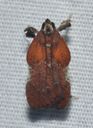
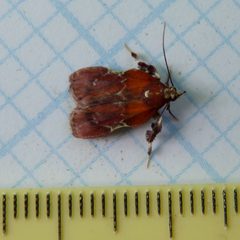
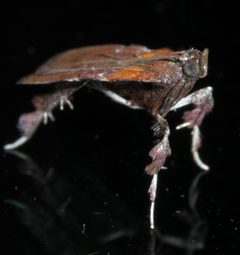
Pronunciation
How to pronounce Galasa nigrinodis: //ɡəˈlɑːsə ˌnɪɡrɪˈnoʊdɪs//
These audio files are automatically generated. While they are not always 100% accurate, they are a good starting point.
Identification
Distinguished from similar small pyralids by association with Buxus plants and larval of tying leaves with silk. Specific wing patterns or genitalic characters for definitive identification are not documented in available sources.
Images
Appearance
Small with wingspan of 13–20 mm. have relatively narrow wings typical of Pyralidae. Coloration details not specified in available sources.
Habitat
Associated with Buxus , which serve as the sole documented larval . therefore corresponds to areas where boxwood occurs, including cultivated landscapes and naturalized .
Distribution
Eastern North America. Specific records include Manitoba (Canada) and Vermont (United States). Range appears to correspond with distribution of Buxus .
Seasonality
active from June to September. Larval development presumably occurs prior to adult , though specific timing not documented.
Diet
Larvae feed on leaves of Buxus . They consume both living and dead leaf tissue within constructed shelters.
Host Associations
- Buxus - larval sole documented ; larvae feed on leaves
Life Cycle
Complete with larval, pupal, and stages. Larvae construct silk shelters by tying together dead leaves of the plant, feeding within these structures. presumably occurs within or near the larval shelter, though specific details are not documented.
Behavior
Larvae exhibit shelter-building , using silk to tie together dead leaves of Buxus. This creates protective microhabitats for feeding and presumably . are , as is typical for pyralid moths.
Ecological Role
Herbivore specialized on Buxus. likely influenced by availability and condition of plants. No documented role as or prey .
Human Relevance
Considered a minor pest of ornamental boxwood in cultivated settings. Larval feeding and webbing may reduce aesthetic value of plants, though economic impact appears limited based on available documentation.
Similar Taxa
- Other Galasa species may overlap in range and use; specific distinguishing characters require detailed examination not covered in general sources
- Other Chrysauginae members share general ; association and larval provide primary differentiation
More Details
Nomenclatural history
Originally described as Corylopeza nigrinodis by Zeller in 1873; later transferred to Galasa.