
Caphys
Walker, 1863
snout moths
Species Guides
1Caphys is a of snout moths in the Pyralidae, Chrysauginae. It was established by Francis Walker in 1863 with Caphys bilinea (now a junior synonym of C. bilineata) as the type . The genus contains eight described species distributed primarily in the Americas, ranging from the southwestern United States through Central America.
Pronunciation
How to pronounce Caphys: //ˈkæ.fis//
These audio files are automatically generated. While they are not always 100% accurate, they are a good starting point.
Identification
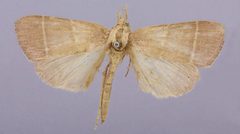
Members of Caphys can be distinguished from other Chrysauginae by genitalic characters, particularly the structure of the male claspers and female ostium. External varies among ; some exhibit distinct forewing patterns with transverse lines (as in C. bilineata), while others are more uniformly colored. Accurate identification to species level typically requires dissection and examination of genitalia.
Images
Distribution
The occurs in the Nearctic and Neotropical regions. Caphys arizonensis is known from Arizona and adjacent areas of the southwestern United States. Caphys bilineata ranges from the southern United States through Central America. Other are recorded from Mexico, Central America, and the Caribbean region.
Similar Taxa
- Other Chrysauginae generaSimilar overall body plan and wing shape; distinguished by genitalic and specific wing pattern elements
- Other Pyralidae generaMay share general snout moth appearance; assignment and genitalic characters separate Caphys
More Details
Taxonomic history
Walker originally designated Caphys bilinea as the type , but this was later synonymized with Caphys bilineata (Stoll, [1781]). The has been revised by Munroe (1970) and subsequent .
Species diversity
Eight are currently recognized: C. arizonensis, C. bilineata, C. dubia, C. eustelechalis, C. fovealis, C. pallida, C. subrosealis, and C. subsordidalis.