Udea profundalis
Packard, 1873
False Celery Leaftier
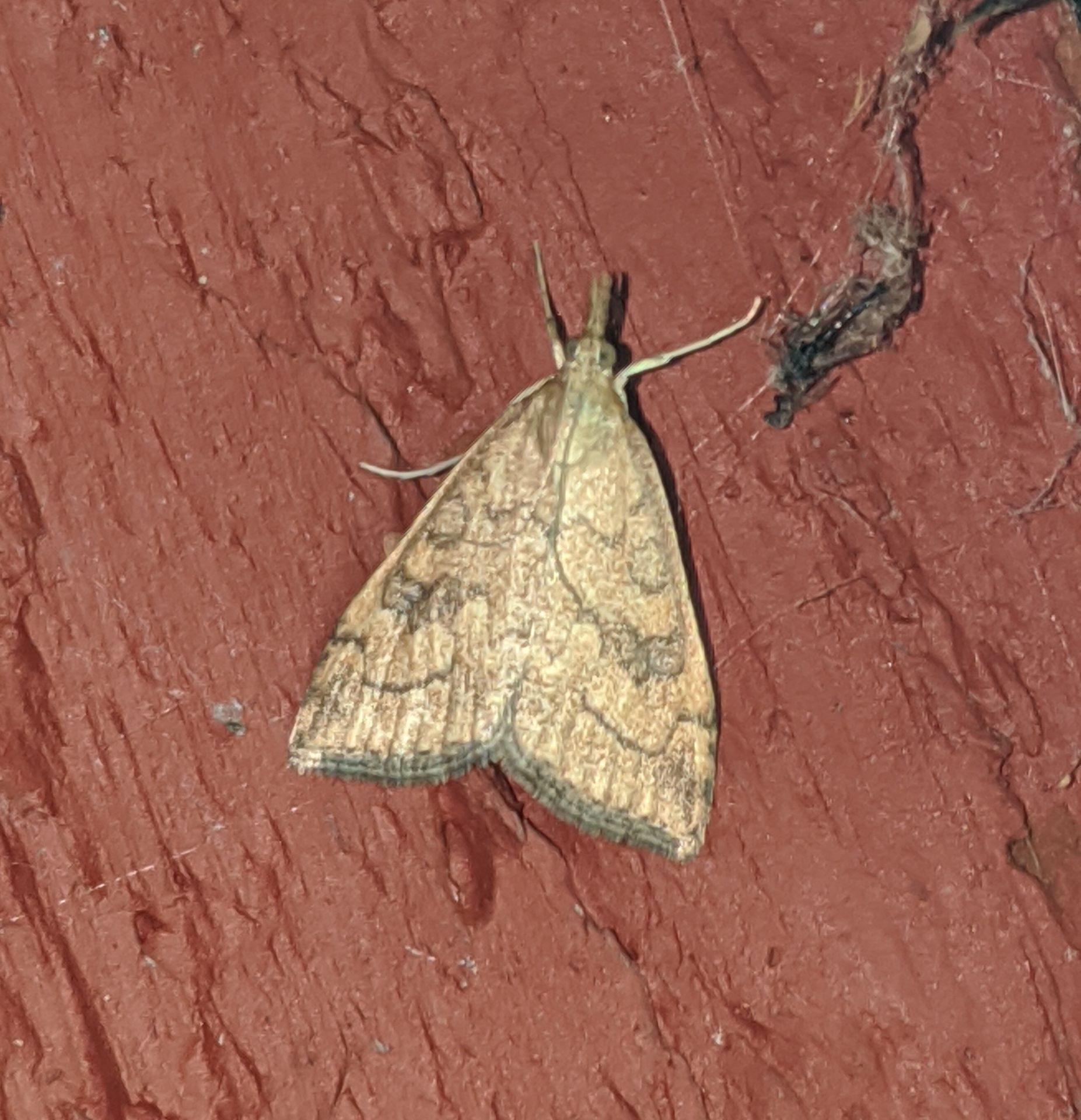
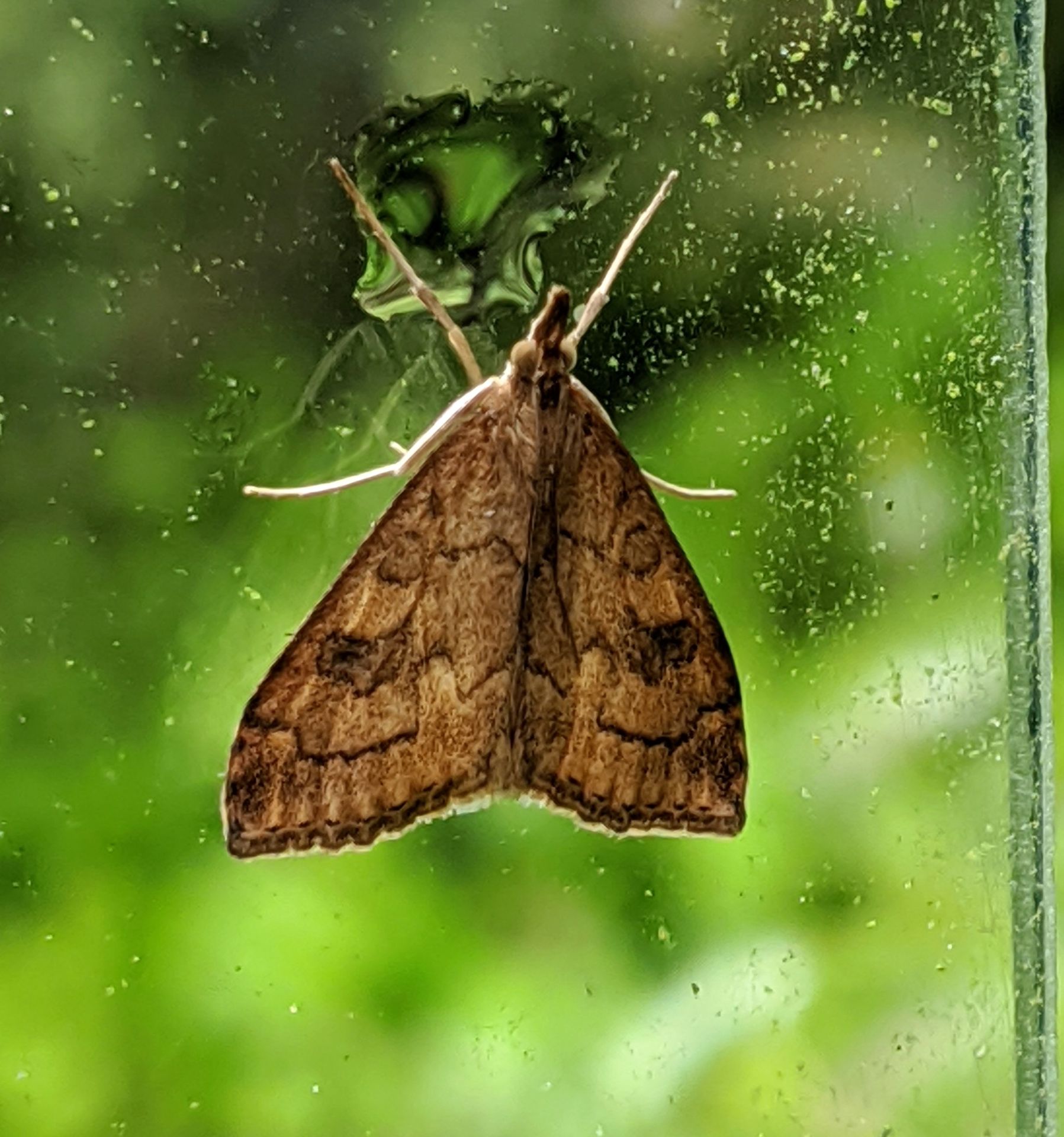
Udea profundalis is a small crambid described by Packard in 1873. It is found in western North America from British Columbia to Texas, with records east of the Rocky Mountains now attributed to the similar Udea rubigalis. The species is commonly known as the False Celery Leaftier. are deep ochreous-brown with distinctive wing markings including an angulated inner line, round discal dot, and bell-shaped spot on the forewings.

Pronunciation
How to pronounce Udea profundalis: /ˈjuːdiə proʊˈfʌndəlɪs/
These audio files are automatically generated. While they are not always 100% accurate, they are a good starting point.
Identification
Distinguished from Udea rubigalis by geographic distribution—U. profundalis occurs west of the Rocky Mountains while records of U. rubigalis are found east of the Rockies. The forewing pattern with angulated inner line, round discal dot, and bell-shaped spot aids identification. Forewing length of 8.5–12 mm provides a size reference.
Images
Appearance
have forewings 8.5–12 mm in length. Forewings are deep ochreous-brown with an inner line angulated outward broadly on the and inward on the submedian. A large, round discal dot and a bell-shaped, spot are present. The outer line is dark. Hindwings are primarily white.
Distribution
Western North America: British Columbia, Washington, Oregon, Nevada, California, and Texas. Records east of the Rocky Mountains refer to Udea rubigalis.
Similar Taxa
- Udea rubigalisHistorically confused with U. profundalis; records east of the Rocky Mountains attributed to U. rubigalis. Both are small crambid with similar (Celery Leaftier vs. False Celery Leaftier).
More Details
Taxonomic clarification
Historical records of Udea profundalis east of the Rocky Mountains have been reassigned to Udea rubigalis, clarifying the western distribution of U. profundalis.