
Marasmia
Lederer, 1863
Species Guides
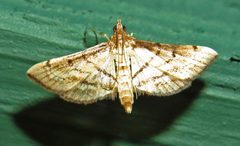
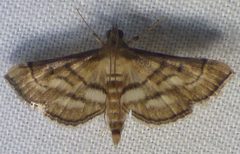
2- Marasmia cochrusalis(Acrobat Moth)
- Marasmia trapezalis(Trapeze Moth)
Marasmia is a of in the Crambidae, Spilomelinae. It was established by Julius Lederer in 1863 and is currently treated as a synonym of Cnaphalocrocis in most modern taxonomic databases, though it remains in use in some literature. The genus includes that are significant agricultural pests, particularly of rice crops. The best-known species, Marasmia ruralis (also known as Cnaphalocrocis medinalis or the rice leaf roller), causes substantial damage to global rice production by folding leaves for feeding and shelter.
Pronunciation
How to pronounce Marasmia: /məˈɹæzmiə/
These audio files are automatically generated. While they are not always 100% accurate, they are a good starting point.
Identification
Marasmia is distinguished from related crambid by wing pattern and genitalic characters, though precise diagnostic features require examination. in this group are small to medium-sized with relatively broad wings. The rice leaf roller (Marasmia ruralis) can be recognized by its folded-leaf larval , though this is a behavioral rather than morphological trait. Accurate identification to genus level typically requires dissection and comparison with due to the taxonomic confusion with Cnaphalocrocis.
Images
Habitat
Associated with grassland and agricultural , particularly rice fields and areas near cereal crops. Larvae develop within folded leaves of plants, creating sheltered microhabitats. Laboratory colonies are maintained on Oryza sativa plants at 26±2°C with 70-80% relative humidity.
Distribution
Globally distributed in regions where rice is cultivated; established documented across Asia and other rice-growing regions. The type locality and precise native range are obscured by the ' widespread distribution through agriculture and taxonomic synonymy with Cnaphalocrocis.
Diet
Larvae feed on leaves of Poaceae, particularly Oryza sativa (rice). Feeding occurs within folded leaves, which larvae create by rolling or folding the leaf blade longitudinally and securing it with silk.
Host Associations
- Oryza sativa - primary Rice; main for M. ruralis, supporting complete larval development and
- Triticum aestivum - associated Wheat; field collections have been made near wheat, though suitability as is less documented than rice
Life Cycle
Complete with , larva, pupa, and stages. Larval development includes multiple instars; fourth instar development ranges 1.5-3.7 days under laboratory conditions depending on temperature and plant quality. Development time is prolonged when feeding on plants with induced resistance. occurs within the folded leaf shelter. is affected by temperature and host plant quality, with reduced reproductive output on plant varieties.
Behavior
Larvae fold rice leaves longitudinally using silk to create sheltered feeding and resting sites. This leaf-rolling protects larvae from and environmental extremes. In selection tests, larvae colonize untreated control plants more rapidly than plants treated with resistance-inducing compounds. Leaf surface characteristics including trichome and wax composition affect success.
Ecological Role
Major agricultural pest of rice causing yield losses through leaf damage and reduced photosynthetic capacity. Serves as a target organism for research on plant-insect interactions, induced resistance, and strategies. can significantly impact regional rice production.
Human Relevance
Significant economic pest of rice, one of the world's most important food crops. Subject to programs and research, including studies on fungal elicitor proteins that induce plant resistance. The taxonomic instability between Marasmia and Cnaphalocrocis creates challenges for agricultural literature and pest management databases.
Similar Taxa
- CnaphalocrocisCurrently treated as a synonym of Marasmia in Catalogue of Life and GBIF, though the relationship remains taxonomically unresolved. The two names have been used interchangeably in agricultural literature, with Cnaphalocrocis medinalis and Marasmia ruralis referring to the same rice pest .
More Details
Taxonomic Status
Marasmia Lederer, 1863 is listed as a synonym of Cnaphalocrocis Lederer, 1863 in Catalogue of Life and GBIF, with both names having identical authorship and year. However, NCBI maintains Marasmia as a separate . This nomenclatural instability affects approximately 5162 observations in iNaturalist and creates confusion in agricultural literature where both names appear for the rice leaf roller.
Research Significance
Marasmia ruralis has become a model organism for studying induced resistance in plants. Research has demonstrated that protein elicitors from fungi (such as PeVL1 from Verticillium lecanii) can trigger rice defenses that reduce larval development rate, , and success, offering potential for sustainable pest management.