
Syngamia florella
Cramer, 1781
orange-spotted flower moth, red waisted florella moth
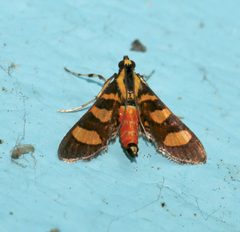
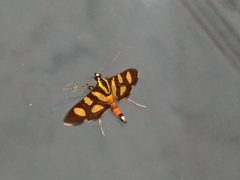
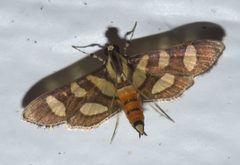
Syngamia florella is a small crambid with a wingspan of approximately 15 mm. It occurs across the southeastern United States through the Caribbean, Central America, and South America to Argentina, with additional records from Bermuda and the Galápagos Islands. are active primarily from July to December, with a narrower September–December period in Florida. The is known from over 7,000 iNaturalist observations.
Pronunciation
How to pronounce Syngamia florella: /sɪŋˈɡeɪ.mi.ə flɔːˈrɛl.lə/
These audio files are automatically generated. While they are not always 100% accurate, they are a good starting point.
Identification
Small size (15 mm wingspan) distinguishes it from larger crambid . Geographic range and timing may aid identification where sympatric with .
Images
Appearance
Small with wingspan approximately 15 mm. Specific coloration and pattern details not provided in sources.
Distribution
Southeastern United States (South Carolina to Florida, Arkansas to Texas), West Indies, Bermuda, Mexico, Central America, and South America to Argentina. Also recorded from Galápagos Islands and Villavicencio, Colombia.
Seasonality
on wing July to December throughout most of range; September to December only in Florida.
Diet
Larvae feed on Borreria brachysepala, Spermacoce laevis, and Spermacoce tetraquetra (Rubiaceae). feeding habits not documented.
Host Associations
- Borreria brachysepala - larval food plant
- Spermacoce laevis - larval food plant
- Spermacoce tetraquetra - larval food plant
Life Cycle
Larval stage documented; complete details not available.
More Details
Taxonomic authorship note
Sources conflict on authorship: Wikipedia cites Caspar Stoll (1781), while GBIF, Catalogue of Life, and NCBI cite Cramer (1781). Cramer (1781) appears correct based on majority consensus among taxonomic databases.
Observation record
Over 7,000 observations documented on iNaturalist as of source date.