
Syngamia
Guenée, 1854
Species Guides
1- Syngamia florella(orange-spotted flower moth)
Syngamia is a of in the Crambidae, Spilomelinae, established by Guenée in 1854. The genus contains approximately 24 recognized distributed across tropical and subtropical regions worldwide. Members are small to medium-sized pyraloid moths, with several species exhibiting distinctive color patterns including orange, yellow, or violet markings.
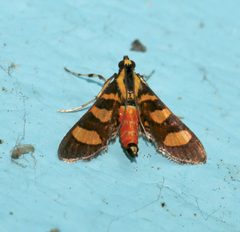
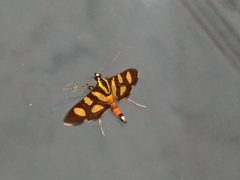
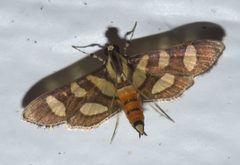
Pronunciation
How to pronounce Syngamia: /sɪŋˈɡeɪmiə/
These audio files are automatically generated. While they are not always 100% accurate, they are a good starting point.
Images
Distribution
Tropical and subtropical regions including Africa, Asia, Australia, and the Americas. Specific distribution varies by ; Syngamia florella has been recorded in the Neotropics and Caribbean, while S. latimarginalis and S. falsidicalis occur in Indo-Australian regions.
More Details
Species diversity
The Syngamia contains 24 currently recognized , with three former species (S. aeruginosa, S. aurantiaca, S. longicornalis) reassigned to other . The most widespread species include S. florella (described 1781) and S. exigualis (described 1823). Several species were described by Hampson in the late 19th and early 20th centuries based on African and Asian material.
Taxonomic history
Syngamia was established by Achille Guenée in 1854. The has been placed in Spilomelinae of Crambidae based on morphological and molecular evidence. Some were originally described in other genera (e.g., Phalaena, Botys, Pionea) and later transferred to Syngamia.