
Blepharomastix ranalis
(Guenée, 1854)
hollow-spotted blepharomastix moth
Blepharomastix ranalis is a of grass moth in the Crambidae. are characterized by their pale tan wings with distinctive dark brown markings and hollow-appearing spots. The species occurs across the eastern and southern United States and Mexico, with adult activity spanning March through October.
Pronunciation
How to pronounce Blepharomastix ranalis: //ˌblɛf.ə.rəˈmæs.tɪks ˈræ.nə.lɪs//
These audio files are automatically generated. While they are not always 100% accurate, they are a good starting point.
Identification
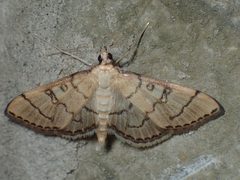
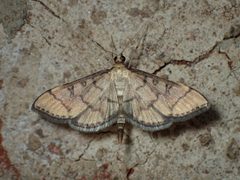
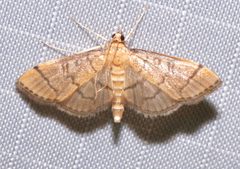
Distinguished by the combination of hollow-appearing and spots (outlined in brown rather than filled), the sharply angled postmedial line on the forewing that turns toward the area and then the inner margin, and the horizontal resting posture with forewings extended beyond hindwings. Similar Crambidae may have filled spots or different wing line patterns.
Images
Appearance
have pale tan wings with dark brown antemedial, postmedial, and dashed terminal lines. The forewing postmedial line turns sharply toward the area and again toward the inner margin. The median area contains an spot and a spot, each outlined in brown, giving them a hollow appearance. At rest, wings are spread horizontally with the forewing extending further than the hindwing.
Distribution
Eastern and southern United States, extending from Arizona, Oklahoma, and Wisconsin westward to Florida, New Hampshire, and Quebec eastward; also present in Mexico. Records include Vermont.
Seasonality
active March through October, with peak sightings from April to August.
Behavior
rest with wings spread horizontally, forewings extended further than hindwings.
Similar Taxa
- Other Blepharomastix speciesShare -level traits; distinguished by specific wing pattern details including the hollow-appearing spots and postmedial line configuration
- Other Crambidae grass mothsSimilar resting posture and general ; distinguished by the unique combination of hollow spots and sharply angled postmedial line
More Details
Taxonomic Note
GBIF lists this with a 'DOUBTFUL' status and places the under Lamprosema, while NCBI and other sources maintain Blepharomastix as the accepted genus. The basionym Stenia ranalis (Guenée, 1854) reflects historical classification changes.