
Gesneria
L.
Species Guides
1- Gesneria centuriella(Smoky Gesneria)
Gesneria is a of approximately 50–62 of flowering plants in the Gesneriaceae, native primarily to Caribbean islands with rare South American exceptions. The genus is distinguished by woody shrub or subshrub habit and alternate leaf arrangement—unusual in the family where decussate leaves are typical. Gesneria is classified in tribe Gesnerieae alongside Bellonia, Pheidonocarpa, and Rhytidophyllum. The genus exhibits high in Caribbean biodiversity hotspots, with many species restricted to single mountain ranges or islands.
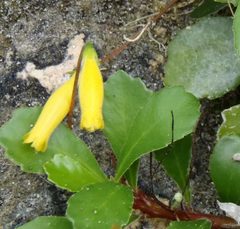
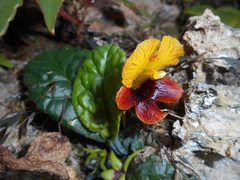
Pronunciation
How to pronounce Gesneria: //ɡɛsˈnɛɹiə//
These audio files are automatically generated. While they are not always 100% accurate, they are a good starting point.
Identification
Distinguished from other Gesneriaceae by alternate (rather than decussate) leaf phyllotaxy; woody shrub or subshrub habit; resupinate or radially symmetrical corollas in some . Distinguished from the closely related Rhytidophyllum by geographic distribution (Gesneria primarily Caribbean, Rhytidophyllum Greater Antilles) and subtle floral and vegetative differences. Species-level identification often requires examination of floral symmetry, calyx , leaf texture ( vs. smooth), and growth habit (terrestrial, saxicolous, or lithophytic).
Images
Habitat
Caribbean islands; montane forests; saxicolous (rock-dwelling) ; lithophytic substrates; seasonally dry to moist tropical forests. Specific occupy narrow ranges: Massif de la Hotte (Haiti), Sierra de Bahoruco (Dominican Republic), and various Puerto Rican localities.
Distribution
Native to islands of the Caribbean; to the Caribbean biodiversity hotspot. Two or three occur in South America as exceptions. Specific documented locations include: Massif de la Hotte and Parc National Pic Macaya (Haiti), Sierra de Bahoruco (Dominican Republic), Puerto Rico, and other Greater and Lesser Antilles.
Ecological Role
Contributes to Caribbean plant biodiversity and ; serves as nectar source for specialized including hummingbirds (Chlorostilbon maugaeus, Anthracothorax dominicus) and bananaquits (Coereba flaveola). Some exhibit mixed mating systems with potential for autonomous selfing as reproductive assurance.
Human Relevance
Named in honor of Conrad Gessner (1516–1565), Swiss naturalist. Subject of taxonomic research highlighting conservation urgency in deforested Caribbean regions. Some have been evaluated for desiccation and freezing , with potential applications for understanding plant stress physiology.
Similar Taxa
- RhytidophyllumClosely related in tribe Gesnerieae; both share alternate leaf arrangement unusual in Gesneriaceae. Distinguished by geographic distribution—Rhytidophyllum primarily Greater Antilles, Gesneria more broadly Caribbean with South American exceptions—and subtle floral .
- BelloniaMember of tribe Gesnerieae; distinguished by vegetative and floral characters, geographic distribution patterns in Caribbean.
- PheidonocarpaMember of tribe Gesnerieae; smaller with distinct fruit and restricted distribution.
Sources and further reading
- BugGuide
- Wikipedia
- iNaturalist taxon
- NCBI Taxonomy
- Catalogue of Life
- What's in a Name? Leslie Saul-Gershenz and Norm Gershenz | Bug Squad
- Commemorating a conservation trifecta: Three new species of Glossoloma honoring a donor, a family of forest stewards, and a conservation visionary | Blog
- Phytokeys | Blog - Part 9
- Pollination Ecology and Breeding Systems of Five Gesneria Species from Puerto Rico
- Species delimitation in the Caribbean Gesneria viridiflora complex (Gesneriaceae) reveals unsuspected endemism
- Three New Gesneria Species (Gesneriaceae) Support Parc National Pic Macaya (Haiti) as an Important Biodiversity Hotspot
- Potential Autonomous Selfing in Gesneria citrina (Gesneriaceae), a Specialized Hummingbird Pollinated Species with Variable Expression of Herkogamy
- Typifications of 42 Mesoamerican names in Gesneriaceae, illustrated with type specimens and field images.
- Gesneriatuberifera (Gesneriaceae), a new lithophytic species from the Sierra de Bahoruco, Barahona Peninsula of southern Hispaniola (Dominican Republic).
- Paraboeazunyiensis (Gesneriaceae), a new species from north Guizhou, China.
- Gesneriads, a Source of Resurrection and Double-Tolerant Species: Proposal of New Desiccation- and Freezing-Tolerant Plants and Their Physiological Adaptations.