
Ecpyrrhorrhoe puralis
(South, 1901)
Ecpyrrhorrhoe puralis is a small crambid with a wingspan of approximately 25 mm. Native to Hubei Province in China, it has become established as an introduced in the eastern United States, where it was first recorded in the early 20th century. The species has spread across at least ten states in the southeastern and mid-Atlantic regions. Its larvae are specialized feeders on Paulownia tomentosa, an ornamental tree also introduced from Asia.
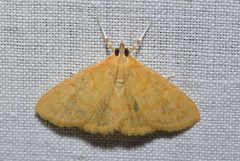
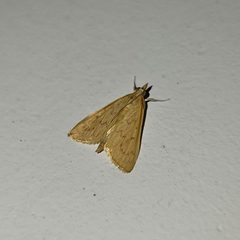
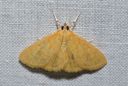
Pronunciation
How to pronounce Ecpyrrhorrhoe puralis: /ɛkpɪrəˈroʊi pjʊˈreɪlɪs/
These audio files are automatically generated. While they are not always 100% accurate, they are a good starting point.
Identification
The small size (25 mm wingspan) and association with Paulownia tomentosa plants may aid identification in areas where the occurs. In the eastern United States, it can be distinguished from native crambid by its documented non-native status and . Specific diagnostic morphological features are not described in available literature.
Images
Appearance
Small with a wingspan of approximately 25 mm. Detailed wing patterning and coloration are not documented in available sources.
Habitat
Associated with containing Paulownia tomentosa, an ornamental tree commonly planted in disturbed areas, roadsides, and urban environments. The occurs in both its native range in China and introduced in the eastern United States.
Distribution
Native to Hubei Province, China. Introduced and established in the eastern United States, with records from Alabama, Georgia, Kentucky, Maryland, Mississippi, North Carolina, Pennsylvania, South Carolina, Tennessee, and West Virginia.
Seasonality
are active from April to September in North America. No seasonality data are available for the native Chinese .
Diet
Larvae feed exclusively on Paulownia tomentosa (empress tree). feeding habits are not documented.
Host Associations
- Paulownia tomentosa - larval food plantRequired for larval development
Ecological Role
As a herbivore on Paulownia tomentosa, the may contribute to of this tree in North America, though its impact has not been quantified.
Human Relevance
The is of minor economic interest as a potential biocontrol agent for Paulownia tomentosa, an tree in the eastern United States. No significant negative impacts on agriculture or human health have been documented.
Similar Taxa
- Other Crambidae speciesSimilar small size and general ; distinguished by association with Paulownia and documented non-native distribution in eastern North America
More Details
Taxonomic Note
GBIF lists this as a synonym under the Mimudea (Mimudea puralis), while NCBI and other sources maintain it in Ecpyrrhorrhoe. The taxonomic status requires further clarification.
Introduction History
The was first described from China in 1901 and was likely introduced to the United States unintentionally with imported Paulownia tomentosa plant material. The timing and of introduction are not documented.