
Crocidophora serratissimalis
Zeller, 1872
angelic crocidophora moth, sawtoothed crocidophora, saw-toothed crocidophora moth
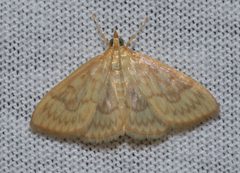
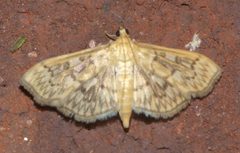
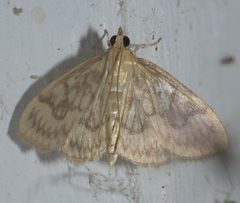
Crocidophora serratissimalis is a small crambid with a wingspan of 18–25 mm. It is widespread in eastern North America, ranging from Quebec and New England south to South Carolina and west to Manitoba. are active from June to September. The is notable for its larvae feeding on the grass Leersia oryzoides.
Pronunciation
How to pronounce Crocidophora serratissimalis: /ˌkrɒsɪˈdɒfərə səˌrætɪˈsɪməlɪs/
These audio files are automatically generated. While they are not always 100% accurate, they are a good starting point.
Identification
The specific epithet 'serratissimalis' (most serrated) and 'saw-toothed' suggest distinctive serrated or toothed features on wings or body, though precise diagnostic characters require examination of genitalia or detailed wing venation typical for Crambidae identification. Small size and summer period help narrow identification within the .
Images
Appearance
Small with wingspan 18–25 mm. Forewings are pale with subtle patterning. Specific coloration details not well documented in sources.
Habitat
Associated with wetland or riparian areas where the larval plant Leersia oryzoides (cutgrass) grows. This grass typically inhabits moist soils, stream margins, and wet meadows.
Distribution
Eastern and central North America: Quebec and New England south to South Carolina, west to Manitoba. Texas record noted as possible but unconfirmed.
Seasonality
on wing June to September. Single or multiple not specified in sources.
Diet
Larvae feed on Leersia oryzoides (cutgrass), a wetland grass. feeding habits not documented.
Host Associations
- Leersia oryzoides - larval cutgrass; recorded larval food plant
Life Cycle
Complete with , larva, pupa, and stages. Specific developmental details not documented.
Behavior
activity typical of Crambidae. Larval feeding on grass stems and leaves inferred from association but not explicitly described.
Ecological Role
Larval herbivore on wetland grasses. Specific functions not documented.
Human Relevance
No significant economic or agricultural impact documented. Not considered a pest .
Similar Taxa
- Other Crocidophora species contains multiple similar small crambid ; identification requires detailed examination of genitalia or wing patterns
- General CrambidaeSmall size and general appearance shared with many grass-feeding crambid ; plant association and geographic range aid identification
More Details
Nomenclature
Specific epithet 'serratissimalis' is the superlative form of 'serratus' (serrated), referring to presumably distinctive serrated structures. emphasize this feature.
Data gaps
Larval , site, stage, and detailed remain undocumented in accessible literature.