
Mimoschinia
Warren, 1892
rufous-banded pyralid moth
Species Guides
1- Mimoschinia rufofascialis(Rufous-banded Crambid Moth)
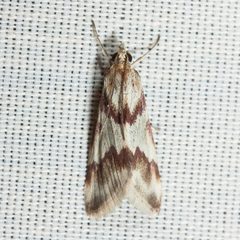
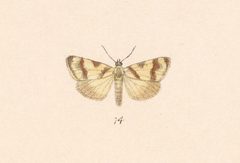
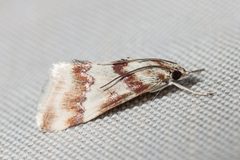
Mimoschinia is a of crambid containing a single , Mimoschinia rufofascialis, commonly known as the rufous-banded pyralid moth or barberpole caterpillar. The species exhibits a broad geographic range spanning the Caribbean, western Canada, the southwestern and western United States, and Mexico. The genus is characterized by small size, with displaying a wingspan of 14–18 mm and showing extended seasonal activity from January through October.
Pronunciation
How to pronounce Mimoschinia: /ˌmaɪmoʊˈʃɪnɪə/
These audio files are automatically generated. While they are not always 100% accurate, they are a good starting point.
Identification
The is distinguished from other crambid genera by its status and the unique combination of small size (14–18 mm wingspan), -banded wing pattern, and association with Malvaceae plants. The four recognized show geographic variation: M. r. rufofascialis (Caribbean), M. r. decorata (Arizona, Mexico), M. r. novalis (western Canada to Texas and California), and M. r. nuchalis (California).
Images
Habitat
Occurs in diverse including natural and semi-natural environments; recorded from ranchlands, state parks, and areas with mixed vegetation including trees, shrubs, and herbaceous plants.
Distribution
Caribbean; western Canada (Alberta to British Columbia); southwestern and western United States (south to Texas, California); Mexico.
Seasonality
recorded on wing January through October, with peak activity June through September.
Diet
Larvae feed on seeds of various Malvaceae including Malvastrum, Abutilon, Wissadula, Sida, Alcea, and Malvella.
Host Associations
- Malvastrum - larval
- Abutilon - larval
- Wissadula - larval
- Sida - larval
- Alcea - larval
- Malvella - larval
Life Cycle
Complete with larval stage specialized for seed-feeding on Malvaceae. Specific details of and stage not documented in available sources.
Behavior
are and attracted to artificial light sources including blacklights and mercury vapor lights. Larvae are seed within Malvaceae fruits.
Ecological Role
Larvae function as seed on Malvaceae, potentially influencing plant reproductive success. serve as prey for and contribute to in diverse .
Human Relevance
Attracted to blacklighting setups used in surveys and biodiversity monitoring. No documented economic importance as pest or beneficial .
Similar Taxa
- Other Crambidae generaMimoschinia is distinguished by its status, specific Malvaceae associations, and geographic range; most similar crambids lack this combination of traits or occur in different regions with different hosts.
More Details
Taxonomic Status
Some sources list Mimoschinia as a synonym of Noctuelia, reflecting ongoing taxonomic uncertainty. The is treated as valid in major databases including NCBI and iNaturalist.
Subspecies
Four recognized based on geographic distribution: rufofascialis (Caribbean), decorata (Arizona, Mexico), novalis (western Canada to Texas and California), and nuchalis (California).