
Stegea
Munroe, 1964
Species Guides
7- Stegea eripalis(Orange-headed Stegea)
- Stegea mexicana
- Stegea minutalis
- Stegea powelli
- Stegea salutalis(Western Stegea)
- Stegea simplicialis
- Stegea sola
Stegea is a of in the Crambidae, Glaphyriinae. The genus was erected by Munroe in 1964 and contains approximately eleven described distributed across North America, the Caribbean, and Central America. Species within this genus are generally small moths with relatively simple wing patterns.

Pronunciation
How to pronounce Stegea: /ˈstɛɡ.i.ə/
These audio files are automatically generated. While they are not always 100% accurate, they are a good starting point.
Identification
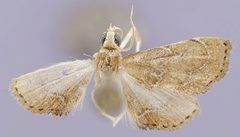
Stegea are small crambid that can be distinguished from related by genitalic characters, particularly male valvae and female signum structures. Wing patterns tend to be relatively plain with subtle markings compared to more boldly patterned Glaphyriinae. Definitive identification to species level requires examination of genitalia or .
Images
Distribution
of Stegea occur in North America (including the southwestern United States), Mexico, the Caribbean (Jamaica), and Central America. The shows a primarily Neotropical and Nearctic distribution pattern.
Similar Taxa
- Other Glaphyriinae generaSimilar small size and general crambid ; distinguished by genitalic and wing venation characters
- GlaphyriaRelated in same with overlapping distribution; Stegea typically has simpler wing patterns and different genitalic structures
More Details
Taxonomic history
Stegea was established by Munroe in 1964 to accommodate previously placed in other . The genus is classified in the Glaphyriinae, a group of small crambid often associated with flowers or fruits.
Species diversity
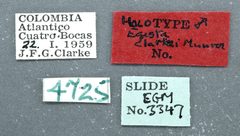
Eleven are currently recognized: S. clarkei, S. eripalis, S. fiachnalis, S. hermalis, S. jamaicensis, S. mexicana, S. minutalis, S. powelli, S. salutalis, S. simplicialis, and S. sola. Several species are known from limited material.