
Lipocosma sicalis
Walker, 1859
Brown-banded Lipocosma Moth
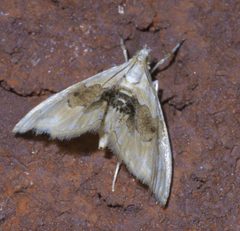
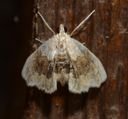
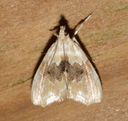
Lipocosma sicalis is a small crambid distributed across eastern and central North America. The was described by Francis Walker in 1859 based on a specimen originally placed in the Leucinodes. are active from spring through mid-summer and are characterized by a wingspan of approximately 15 mm. The 'Brown-banded Lipocosma Moth' reflects distinctive patterning on the wings.
Pronunciation
How to pronounce Lipocosma sicalis: //lɪpoʊˈkɒsmə ˈsaɪkəlɪs//
These audio files are automatically generated. While they are not always 100% accurate, they are a good starting point.
Identification
The combination of small size (~15 mm wingspan), brown-banded forewing pattern, and presence in eastern North American distinguishes this from other Lipocosma. Similar congeneric species may require genitalia examination or molecular analysis for definitive identification. The period (April–August) and geographic range can aid in narrowing possibilities within the .
Images
Appearance
Small with wingspan approximately 15 mm. Forewings display brown banding pattern that gives the its . Wing shape and patterning consistent with Glaphyriinae characteristics. Specific coloration details of body and wing markings require specimen examination.
Distribution
Eastern and central North America: recorded from Alabama, Arkansas, Florida, Georgia, Illinois, Indiana, Kansas, Maryland, Massachusetts, Mississippi, Missouri, New Hampshire, North Carolina, Ohio, Oklahoma, Ontario, South Carolina, Tennessee, Texas, and West Virginia.
Seasonality
active April through August, with peak activity likely varying by latitude within the range.
Similar Taxa
- Other Lipocosma speciesCongeneric share similar size range and general ; accurate identification often requires examination of genitalia or detailed wing pattern analysis
More Details
Taxonomic History
Originally described as Leucinodes sicalis by Walker in 1859, later transferred to Lipocosma. The basionym reflects early placement in a different crambid .