
Lipocosma polingi
Munroe, 1972
Mantled Lipocosma
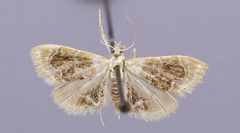
Lipocosma polingi is a small crambid described by Munroe in 1972. It occurs in the southwestern United States, with confirmed records from Arizona and Texas. are active during the warmer months, with records spanning May through October. The is one of approximately 30 described species in the Lipocosma, which is characterized by distinctive wing patterns and small size.

Pronunciation
How to pronounce Lipocosma polingi: //lɪpoʊˈkɒzmə ˈpoʊlɪndʒaɪ//
These audio files are automatically generated. While they are not always 100% accurate, they are a good starting point.
Identification
Distinguished from congeneric by genitalic characters and subtle wing pattern differences; precise field identification requires examination of specimens. The small size (forewing ~6 mm) and southwestern U.S. distribution help narrow possibilities within Lipocosma. Distinguished from superficially similar crambids in other by the combination of size, wing venation, and genitalic structure.
Images
Appearance
Small with forewing length approximately 6 mm. Wing pattern and coloration typical of Lipocosma, though specific markings are not detailed in available sources. Body proportions consistent with Glaphyriinae.
Habitat
Associated with oak-dominated ; larval relationship with Quercus suggests occurrence in woodland and scrubland environments where oaks are present. Specific microhabitat preferences for are not documented.
Distribution
Southwestern United States: Arizona (Baboquivari Mountains) and central and southern Texas. The disjunct distribution pattern suggests possible additional in intervening areas of New Mexico and northern Mexico, though these remain unconfirmed.
Seasonality
on wing from May to October, indicating a multi-month period spanning late spring through autumn. This extended season suggests either multiple or a long-lived adult stage.
Diet
Larvae possibly feed on Quercus (oaks). feeding habits are not documented.
Host Associations
- Quercus - possible larval Larval diet inferred from congeneric associations; direct observation lacking
Ecological Role
Probable role as herbivore in oak woodland during larval stage; specific ecological functions are not documented.
Similar Taxa
- Other Lipocosma speciesCongeneric share similar size and general ; precise identification requires genitalic examination
- Other Glaphyriinae members share small size and crambid wing shape; distinguished by wing pattern and genitalic details
More Details
Taxonomic history
Described by Munroe in 1972. The specific epithet 'polingi' honors an individual (likely a collector or colleague), though the etymology is not explicitly documented in available sources.