
Aethiophysa invisalis
(Guenée, 1854)
Invisible Crambid
Aethiophysa invisalis is a small in the Crambidae, commonly known as the Invisible Crambid. It was first described by French entomologist Achille Guenée in 1854. The has a broad distribution across the Americas, with records from eastern North America through Central America to South America. Despite its , it is not particularly cryptic; the name likely refers to its small size and inconspicuous appearance among vegetation.
Pronunciation
How to pronounce Aethiophysa invisalis: /ˌiːθioʊˈfaɪsə ˌɪnvɪˈsælɪs/
These audio files are automatically generated. While they are not always 100% accurate, they are a good starting point.
Identification
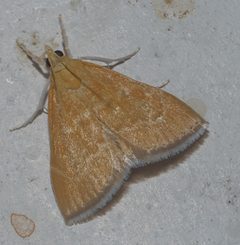
Difficult to identify visually without close examination due to plain appearance. Similar to other small, pale crambid . Genitalia dissection or molecular analysis may be required for definitive identification. The broad geographic range and lack of distinctive markings make field identification challenging.
Images
Appearance
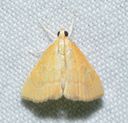
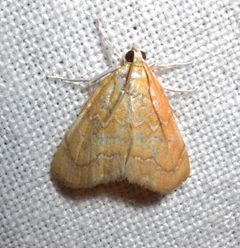
A small crambid with relatively plain, unmarked wings. have narrow, triangular forewings and a slender body typical of the . The wings are generally pale with subtle patterning, lacking bold markings or distinctive coloration that would make it easily recognizable in the field.
Habitat
Found in diverse environments across its range, including deciduous forests, grasslands, and disturbed areas. Specific microhabitat preferences are poorly documented.
Distribution
Eastern United States (Alabama, Florida, Illinois, Indiana, Maryland, Michigan, Missouri, Ohio, Oklahoma, South Carolina, Tennessee, Texas, West Virginia), Ontario and Quebec in Canada, French Guiana, and broadly across Central and South America. Most records are concentrated east of the Rocky Mountains in North America.
Seasonality
activity period varies by latitude. North American records span multiple months, suggesting at least one extended period or multiple , though specific timing is not well documented.
Similar Taxa
- Other Aethiophysa speciesCongeneric share similar small size and plain wing , requiring careful examination for separation.
- Glaphyria speciesFormerly classified in this ; closely related and morphologically similar small crambids with comparable preferences.
- Small pale Crambidae genera (e.g., Udea, Pyrausta)Overlap in size, coloration, and general appearance; many require genitalia examination for accurate identification.
More Details
Taxonomic History
The has undergone taxonomic revision, with GBIF listing it as a synonym of Glaphyria invisalis. Current sources (iNaturalist, Wikipedia) retain it in Aethiophysa, indicating ongoing taxonomic uncertainty or recent reclassification.
Observation Frequency
With over 1,900 iNaturalist observations, it is among the more frequently documented small crambid in North America, likely due to its broad distribution rather than any particular abundance.