
Neodactria luteolellus
Clemens, 1860
Mottled Grass-veneer
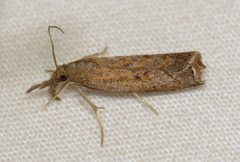
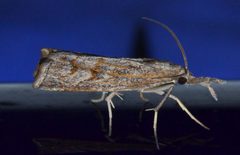
Neodactria luteolellus is a small crambid commonly known as the mottled grass-veneer. It was described from North America in 1860 and is associated with grassland across a broad transcontinental range. The has a single with active in mid-summer.
Pronunciation
How to pronounce Neodactria luteolellus: /niːoʊˈdæktriə luːtiˈolɛləs/
These audio files are automatically generated. While they are not always 100% accurate, they are a good starting point.
Identification
Distinguished from similar Crambidae by combination of small size, mottled yellowish-brown forewing pattern, and grassland association. May be confused with other Neodactria ; genitalia examination or may be required for definitive identification. The specific epithet luteolellus refers to the yellowish (luteous) coloration.
Images
Appearance
Small with wingspan 13–24 mm. Forewings mottled with yellowish-brown and darker markings, typical of grass-veneer moths. Hindwings paler, grayish. Overall coloration provides camouflage against dried grasses.
Habitat
Grassland areas including prairies, aspen parklands, and forest openings. Occupies herbaceous vegetation zones with abundant grasses.
Distribution
Transcontinental in North America: Labrador and Quebec south to North Carolina, west to Arizona and California, north to Alberta. Records from Canadian provinces include Alberta, Manitoba, and Saskatchewan.
Seasonality
active late June to mid-July. One per year ().
Diet
Larvae feed on grasses (Poaceae). Specific grass not documented.
Life Cycle
Complete with , larval, pupal, and stages. Larval stage feeds on grasses. likely occurs in soil or within grass stems. Single .
Ecological Role
Larval herbivore on grasses; contributes to nutrient cycling in grassland . are and attracted to light.
Human Relevance
No significant economic impact. Occasionally encountered by naturalists and enthusiasts. Not considered a pest of turf or agricultural grasses.
Similar Taxa
- Other Neodactria speciesSimilar size and ; require detailed examination for separation
- Crambus and related grass-veneer generaShare grassland and general appearance; differ in wing pattern details and genitalia
More Details
Taxonomic history
Described by James Brackenridge Clemens in 1860, a prominent 19th-century American entomologist who described numerous North American Lepidoptera.
Observation frequency
Well-represented in citizen science platforms with over 4,000 observations, indicating it is relatively common and detectable within its range.