
Calamotropha
Zeller, 1863
Species Guides
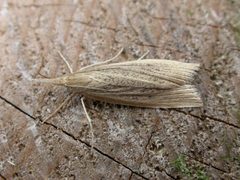
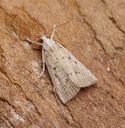
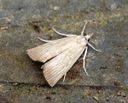
1- Calamotropha paludella(Bulrush Veneer)
Calamotropha is a of grass moths in the Crambidae, Crambinae. in this genus are distributed across Europe, Asia, and Africa, with particular diversity in the Oriental and Afrotropical regions. The genus has been subject to taxonomic revision, with numerous species described from China and other regions. are generally small to medium-sized with characteristic crambine . Larval stages are typically associated with grasses and related plants.
Pronunciation
How to pronounce Calamotropha: //kæləˈmɒtrəfə//
These audio files are automatically generated. While they are not always 100% accurate, they are a good starting point.
Identification
Calamotropha can be distinguished from related crambine by genitalic characters, particularly male valvae and female signum structures. Wing patterns often feature longitudinal stripes or streaks typical of the Crambinae. Accurate species-level identification generally requires dissection and examination of genitalia; external alone is often insufficient due to similarity among .
Images
Habitat
in this are primarily associated with grassland , including meadows, savannas, and agricultural areas where grasses occur. Many occupy moist or wetland environments where their larval food plants thrive.
Distribution
Recorded from Europe (Denmark, Norway, Sweden), Asia (China, Japan, and broader Oriental region), and Africa (Afrotropical region). The shows highest in the Oriental and Afrotropical regions based on described .
Seasonality
activity patterns vary by and region; in temperate zones, periods typically occur during warmer months. Specific phenological data varies among the numerous species in the .
Diet
Larvae feed on grasses (Poaceae) and related monocot plants. Specific plant associations vary by and have been documented for some but not all members of the .
Host Associations
- Poaceae - larval food plantgrasses
Life Cycle
Complete with , larva, pupa, and stages. Larvae are stem borers or feed within grass stems and leaf . typically occurs within the larval feeding tunnel or in soil.
Behavior
are generally and attracted to light. Larvae are concealed feeders within grass stems, consistent with the typical crambine lifestyle.
Ecological Role
Larvae function as herbivores in grassland , with some potentially reaching pest status in agricultural settings. They contribute to nutrient cycling through their feeding activities on grasses.
Human Relevance
Some are minor pests of cereal crops and pasture grasses. The has been subject to taxonomic study due to its agricultural and ecological significance in grass-dominated .
Similar Taxa
More Details
Taxonomic history
The was established by Zeller in 1863. Significant revisions include works by Bleszynski (1970) on Oriental , and more recent treatments of Chinese fauna by Chen et al. (2002) and Li & Li (2012), which added multiple new species.
Species diversity
The contains numerous described , with ongoing taxonomic work revealing additional diversity, particularly in under-sampled regions of Asia and Africa.