
Urola nivalis
(Drury, 1773)
Snowy Urola Moth
Urola nivalis, commonly known as the snowy urola , is a small crambid moth found across eastern and central North America. are active from May through September, producing two annually. The has a wingspan of 15–23 mm. Larvae feed on grasses and have been recorded as pests of Ligustrum species.
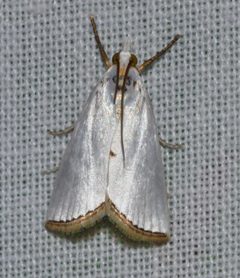
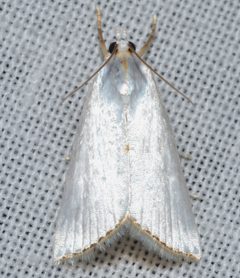
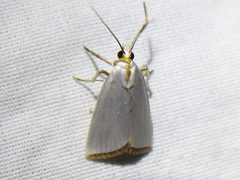
Pronunciation
How to pronounce Urola nivalis: /uˈroː.la nɪˈvaː.lɪs/
These audio files are automatically generated. While they are not always 100% accurate, they are a good starting point.
Identification
Distinguished from similar crambid by the combination of its small size (15–23 mm wingspan), (May–September), and documented association with grass . Specific diagnostic characters for field identification are not available in sources.
Images
Appearance
Small with wingspan of 15–23 mm. The specific coloration and pattern details are not documented in available sources.
Habitat
Associated with grassy and areas where plants (grasses and Ligustrum ) occur. Specific habitat requirements beyond host plant presence are not documented.
Distribution
Eastern and central North America: southern Canada and Maine south to Florida, west to Illinois and Texas.
Seasonality
active May to September; two per year.
Diet
Larvae feed on various grasses and Ligustrum .
Host Associations
- Poaceae - larval food plantvarious grasses
- Ligustrum - larval food plantconsidered a pest of this
Life Cycle
Two per year. Detailed description of developmental stages and strategy not available in sources.
Human Relevance
Larvae are considered a pest of Ligustrum .
Similar Taxa
- Other Urola species-level similarity; specific distinguishing characters not documented
- Other small CrambidaeSize and general overlap; and associations may aid separation