
Sphenarches
Meyrick, 1886
Species Guides
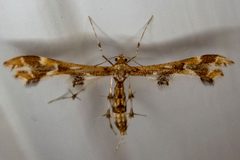
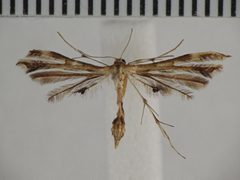
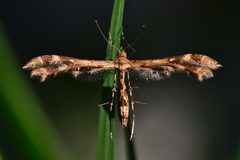
2- Sphenarches anisodactylus(geranium plume moth)
- Sphenarches ontario(Grape Flower Plume Moth)
Sphenarches is a of plume moths in the Pterophoridae. are distributed across pantropical regions, with records from Japan and southern Canada. The genus includes at least eight described species, with Sphenarches anisodactylus being the most studied. plant associations have been documented for several species.
Pronunciation
How to pronounce Sphenarches: /sfɛˈnɑrkiz/
These audio files are automatically generated. While they are not always 100% accurate, they are a good starting point.
Identification
As plume moths in the Pterophoridae, members of this possess the characteristic split or divided wings that give the family its . The genus can be distinguished from other genera by genitalic and wing venation characters, though specific diagnostic features require examination. -level identification within Sphenarches relies on subtle differences in wing pattern and male genitalia.
Images
Habitat
Pantropical and warm temperate environments; specific preferences vary by . Sphenarches anisodactylus has been studied in Florida.
Distribution
Pantropical distribution with extensions into Japan and southern Canada. Specific have more restricted ranges: Sphenarches ontario occurs in Ontario, Canada; Sphenarches caffer and S. cafferoides are African; S. zanclistes is known from the Oriental region.
Host Associations
- Dolichos lablab - plantLablab bean
- Lagenaria leucantha clavata - plantBottle gourd cultivar
- Lagenaria leucantha gourda - plantBottle gourd cultivar
Human Relevance
Some are associated with cultivated plants including lablab bean and bottle gourd, suggesting potential minor agricultural significance.
Similar Taxa
- Other Pterophoridae generaAll plume moths share the divided wing characteristic; Sphenarches is distinguished by genitalic and wing venation features
More Details
Species composition
The includes Sphenarches anisodactylus (type , formerly Sphenarches synophrys), S. bilineatus, S. bifurcatus, S. caffer, S. cafferoides, S. nanellus, S. ontario, and S. zanclistes. The validity of Sphenarches languidus is doubtful and it may be synonymous with S. nanellus.
Taxonomic history
The was established by Meyrick in 1886. Sphenarches anisodactylus has been subject to study in Florida, but detailed biological information for most remains limited.