
Megalorhipida
Amsel, 1935
Species Guides
1- Megalorhipida leucodactylus(Spiderling Plume Moth)
Megalorhipida is a of plume moths (Pterophoridae) described by Hans Georg Amsel in 1935. are distributed across pantropical and subtropical regions. The genus contains 18 described species, including the type species M. palaestinensis. Species in this genus have been associated with plants in at least six plant , with larvae feeding on reproductive structures and foliage. The genus name is frequently misspelled as 'Megalorrhipida' in historical literature, though this spelling has been deemed incorrect under ICZN rules.
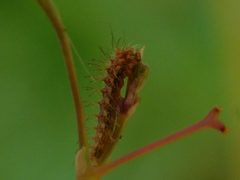
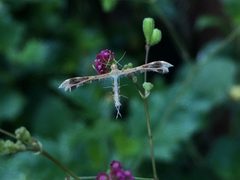
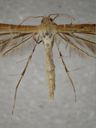
Pronunciation
How to pronounce Megalorhipida: //ˌmɛɡəloʊrəˈpɪdə//
These audio files are automatically generated. While they are not always 100% accurate, they are a good starting point.
Identification
Megalorhipida are plume moths characterized by divided or lobed wings typical of the Pterophoridae. The can be distinguished from the related genus Antarches, whose species have been transferred to Megalorhipida, by genitalic and wing venation characters established in taxonomic revisions by Gielis (2006). Specific diagnostic features for the genus require examination of specimens; field identification to species level is challenging without dissection or molecular analysis.
Images
Habitat
occur in pantropical and subtropical climates, including urban areas, coastal regions, and desert valleys. In northern Chile, M. leucodactyla has been recorded from the Azapa valley in a northern desert region. In Sicily, the species was found in urban environments of Palermo city associated with its plant.
Distribution
Circum-tropical and subtropical distribution. Documented from: South America (Chile, Peru, Argentina), Europe (Italy, Sicily), Middle East (type locality region), and various Pacific and Atlantic islands. The has been recorded as an introduced in some Mediterranean localities.
Diet
Larvae feed on plants in multiple including Nyctaginaceae, Amaranthaceae, Fabaceae, Goodeniaceae, Asteraceae, and Verbenaceae. Specific feeding records include: fruits of Boerhavia repens ssp. viscosa (Nyctaginaceae) in Sicily, and Tessaria absinthioides (Asteraceae) in Chile. have been observed visiting light sources.
Host Associations
- Boerhavia repens ssp. viscosa (Nyctaginaceae) - larval larvae feed on fruits; recorded in Sicily
- Tessaria absinthioides (Asteraceae) - larval new record from Chile; stages bred from host plant
Life Cycle
Holometabolous development with , larval, pupal, and stages. Multiple larval instars have been observed. In M. leucodactyla, pupae and larvae of different instars have been found concurrently on plants. Adults are attracted to light. Specific details on egg laying, sites, and times are not well documented.
Behavior
are and attracted to artificial light sources. Larval feeding involves consumption of plant fruits and foliage. Laboratory bioethological observations have been conducted on adults and larvae of M. leucodactyla.
Ecological Role
Larvae function as herbivores on flowering plants, potentially affecting seed production through fruit consumption. Some plants, such as Boerhavia repens, are in urban Mediterranean , suggesting the may interact with non-native plant .
Human Relevance
The has been introduced to some regions outside its native range, with M. leucodactyla recorded as new to Italy and Sicily. plant associations include some economically minor or weedy . No significant economic impact or applications have been documented.
Similar Taxa
- Antarches formerly placed in Antarches have been transferred to Megalorhipida following taxonomic revision by Gielis (2006); these were historically confused and are now synonymized
- Other Pterophoridae generaGeneric-level identification in plume moths requires examination of genitalic structures and wing venation; Megalorhipida is distinguished by characters established in Gielis (2006)
Misconceptions
The name is frequently misspelled as 'Megalorrhipida' in literature, including some original publications. Under ICZN Article 32.2.1, 'Megalorhipida' has been established as the correct original spelling through First Reviser action. The former name 'M. defectalis' was synonymized with M. leucodactyla by Karsholt & Gielis (1995).
More Details
Taxonomic History
The was described by Amsel in 1935 with inconsistent spelling in the original publication. Gielis (2006) re-evaluated specimens and formally established the correct spelling as Megalorhipida, transferring from the genus Antarches. The genus now contains 18 described species.
Host Plant Breadth
records span six plant , indicating broad polyphagy at the level. However, individual may show narrower host ranges; direct breeding records are limited to specific host associations in M. leucodactyla.
Sources and further reading
- BugGuide
- Wikipedia
- GBIF taxonomy match
- iNaturalist taxon
- Catalogue of Life
- Megalorhipida leucodactyla (Fabricius) (Lepidoptera: Pterophoridae): first distribution record from Chile and new host plant record
- Presence of Megalorhipida leucodactyla (Lepidoptera Pterophoridae) in Sicily: new report for the Italian fauna and notes on the diffusion of its host plant Boerhavia repens L. ssp. viscosa(Choisy) Maire (Nyctaginaceae)