Adaina ambrosiae
ragweed plume moth, ambrosia plume moth
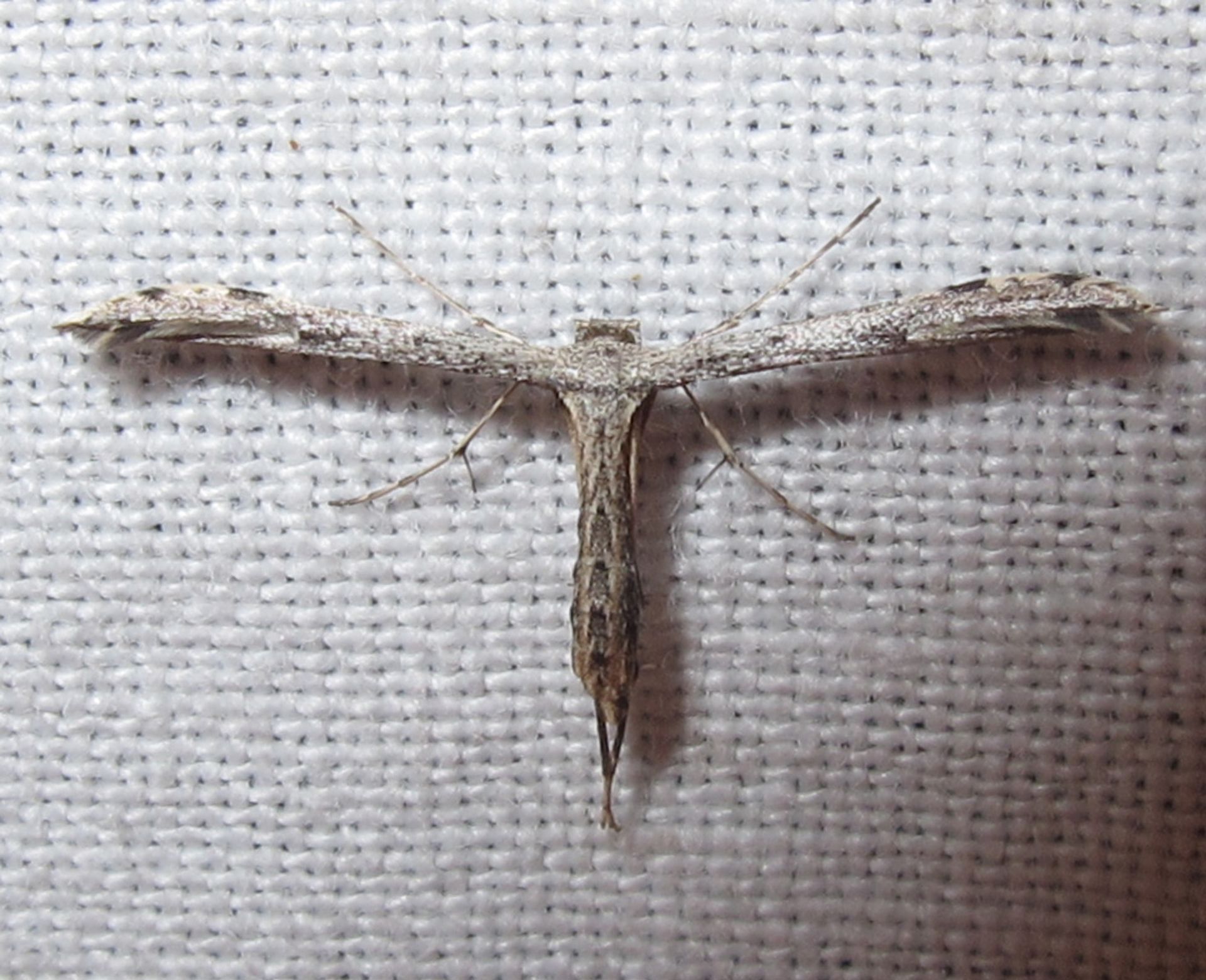
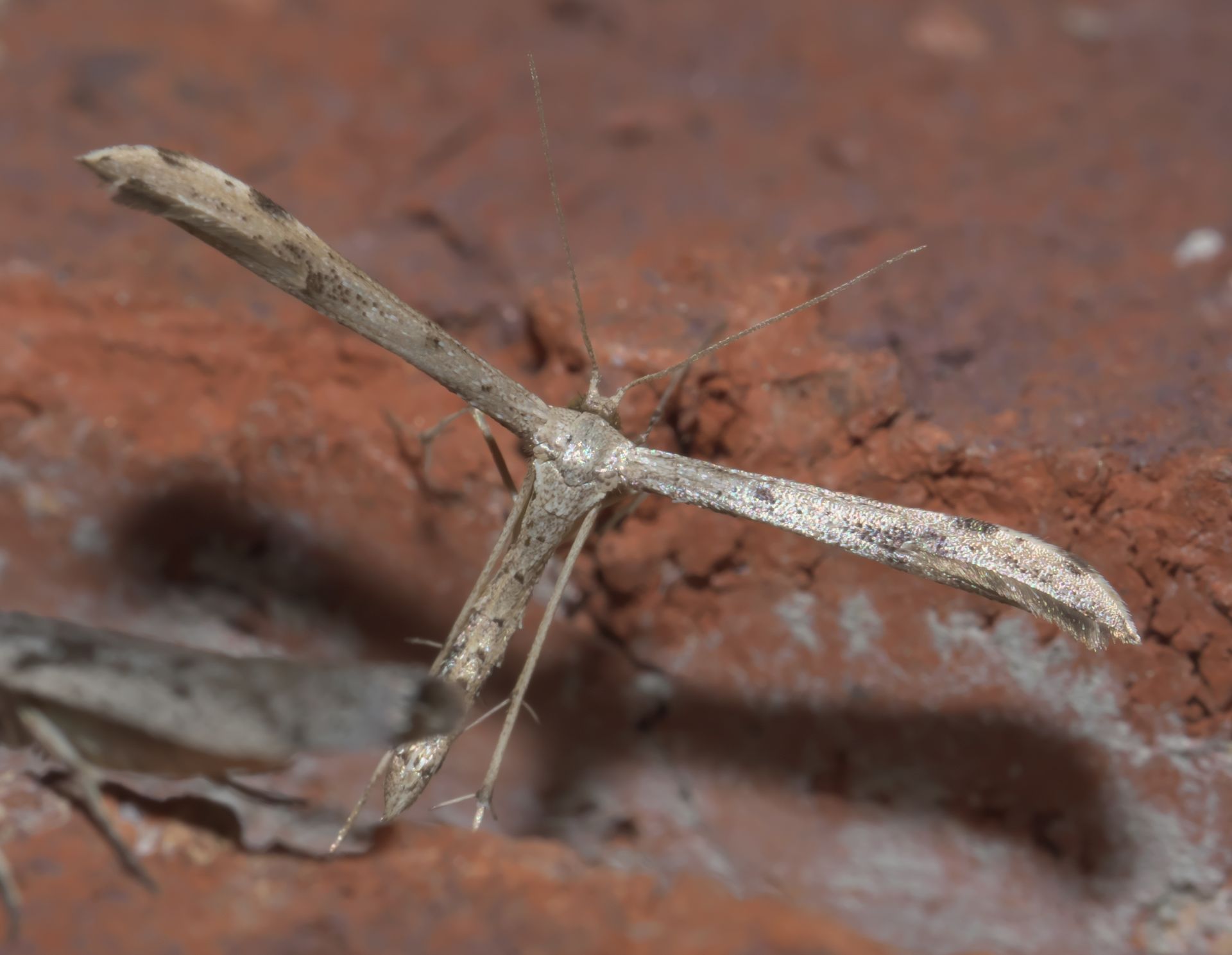
Adaina ambrosiae is a small in the Pterophoridae, recognized by its distinctive split-wing appearance. The has a broad distribution across North America and extends into the Caribbean and Central America. are active year-round in southern portions of the range. Larvae feed on multiple plants in the Asteraceae family, particularly Ambrosia species, from which the specific epithet derives.
Pronunciation
How to pronounce Adaina ambrosiae: //əˈdeɪ.nə æmˈbroʊ.si.aɪ//
These audio files are automatically generated. While they are not always 100% accurate, they are a good starting point.
Identification
Distinguished from other plume moths by size, geographic range, and association with Ambrosia plants. The wing division into lobed plumes separates Pterophoridae from all other . Specific identification within Adaina requires examination of genitalia or association with known host plants.
Images
Appearance
Small with wingspan of 13–17 mm. Wings are deeply divided into plume-like lobes, characteristic of the Pterophoridae. Coloration is typically pale with subtle patterning. The fringed, feathery wing margins create a distinctive silhouette at rest.
Habitat
Found in open, disturbed where plants grow, including roadsides, fields, and agricultural areas. Associated with vegetation and areas supporting Ambrosia and related Asteraceae.
Distribution
North America from California east to Florida and north to Ontario. Also recorded from Bermuda, Rica, Jamaica, Puerto Rico, and the Virgin Islands.
Seasonality
are on wing nearly year-round in the southern part of the range. Activity patterns vary with latitude, with more restricted periods in northern .
Diet
Larvae feed on leaves and stems of multiple plants: Ambrosia artemisiifolia, A. acanthicarpa, A. chamissonis, A. confertiflora, A. dumosa, A. eriocentra, A. cumanensis, Pluchea rosea, Melanthera nivea, Helianthus annuus, H. tuberosa, Xanthium strumarium, and Cynara scolymus. feeding habits are not documented.
Host Associations
- Ambrosia artemisiifolia - larval common ragweed
- Ambrosia acanthicarpa - larval bur-sage
- Ambrosia chamissonis - larval silver bur ragweed
- Ambrosia confertiflora - larval weakleaf bur ragweed
- Ambrosia dumosa - larval burrobush
- Ambrosia eriocentra - larval woollyfruit burr ragweed
- Ambrosia cumanensis - larval
- Pluchea rosea - larval sweetscent
- Melanthera nivea - larval snowy squarestem
- Helianthus annuus - larval common sunflower
- Helianthus tuberosa - larval Jerusalem artichoke
- Xanthium strumarium - larval cocklebur
- Cynara scolymus - larval globe artichoke
Life Cycle
Complete with , larval, pupal, and stages. Larvae are internal feeders on plant tissues. Specific details of site and stage are not documented.
Ecological Role
Larval herbivore on Asteraceae. likely influenced by abundance of weedy Ambrosia . May serve as prey for and , though specific records are lacking.
Human Relevance
Minor potential as agent for weedy Ambrosia , particularly common ragweed (Ambrosia artemisiifolia), a significant allergen source. Not known to be economically important on cultivated crops.
Similar Taxa
- Other Adaina speciesSimilar plume wing and small size; require genitalia dissection or association for separation
- Other PterophoridaeShared characteristics of divided wings; -level identification requires detailed examination
Sources and further reading
- BugGuide
- Wikipedia
- iNaturalist taxon
- NCBI Taxonomy
- Death to aphids: Brown ambrosia aphid, Uroleucon ambrosiae and other assorted aphids meet flower fly larvae, Syrphidae — Bug of the Week
- Cup plant feeds brown ambrosia aphid, Uroleucon ambrosiae, which in turn provides dinner for lynx spiders, lady beetles, long-legged flies, flower flies, and green lacewings — Bug of the Week
- Archive — Bug of the Week