
Pyrisitia nise
(Cramer, 1775)
mimosa yellow
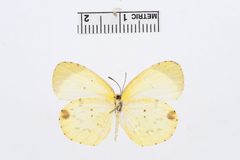
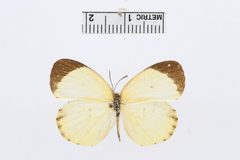
Pyrisitia nise, commonly known as the mimosa yellow, is a small in the Pieridae. It ranges from Argentina northward through the southern United States, with established in central and southern Florida and along the Texas Gulf Coast. The exhibits pronounced in wing patterning and has a documented association with Mimosa pudica as its larval plant.
Pronunciation
How to pronounce Pyrisitia nise: //pɪˈrɪsɪtiə ˈnɪseɪ//
These audio files are automatically generated. While they are not always 100% accurate, they are a good starting point.
Identification
Distinguished from similar yellow pierids by the combination of: (1) narrow black outer edges on forewing upperside only, (2) reduced or absent black margins on hindwing, and (3) consistent absence of hindwing markings in females. The in hindwing patterning is diagnostic when specimens of both sexes are available. Smaller size and more restricted black markings separate it from larger sulphurs such as Phoebis .
Images
Habitat
Brushy woodland edges; open disturbed areas with plant availability
Distribution
Argentina north through Central America and Mexico to southern United States. Resident in central and southern Florida, Texas Gulf Coast, and Tennessee Valley. Occasional stray to central Texas, southeastern Arizona; rare records from southern California, southern Colorado, and Kansas.
Seasonality
May–August in southern Florida; September–November in southern Texas; year-round in tropical portions of range
Diet
feed on flower nectar; larvae feed on Mimosa pudica
Host Associations
- Mimosa pudica - larval plant
Similar Taxa
- Pyrisitia lisaSimilar size and yellow coloration; P. nise distinguished by more extensive black forewing margins and in hindwing patterning
- Abaeis nicippeOverlapping range and ; A. nicippe has more orange tone and different wing pattern
- Phoebis sennaeLarger yellow pierid with more extensive black markings; P. nise is smaller with reduced black pattern
More Details
Subspecies
Multiple recognized across range: P. n. nise (Jamaica), P. n. stygma (Peru, Ecuador), P. n. tenella (Brazil, Argentina, Paraguay), P. n. larae (Cuba), P. n. nelphe (Mexico, Panama), P. n. floscula (Bolivia, Argentina, Peru)