Parides alopius
(Godman & Salvin, 1890)
white-dotted cattleheart
Parides alopius, commonly known as the white-dotted cattleheart, is a to Mexico. It is a member of the ascanius group within the Parides, characterized by distinctive wing patterning with submarginal spots. The species has been recorded from very few localities and is considered uncommon, though not currently known to be threatened. A single stray individual has been documented in southeastern Arizona.
Pronunciation
How to pronounce Parides alopius: //ˈpa.rɪ.deɪz əˈloʊ.pi.us//
These audio files are automatically generated. While they are not always 100% accurate, they are a good starting point.
Identification
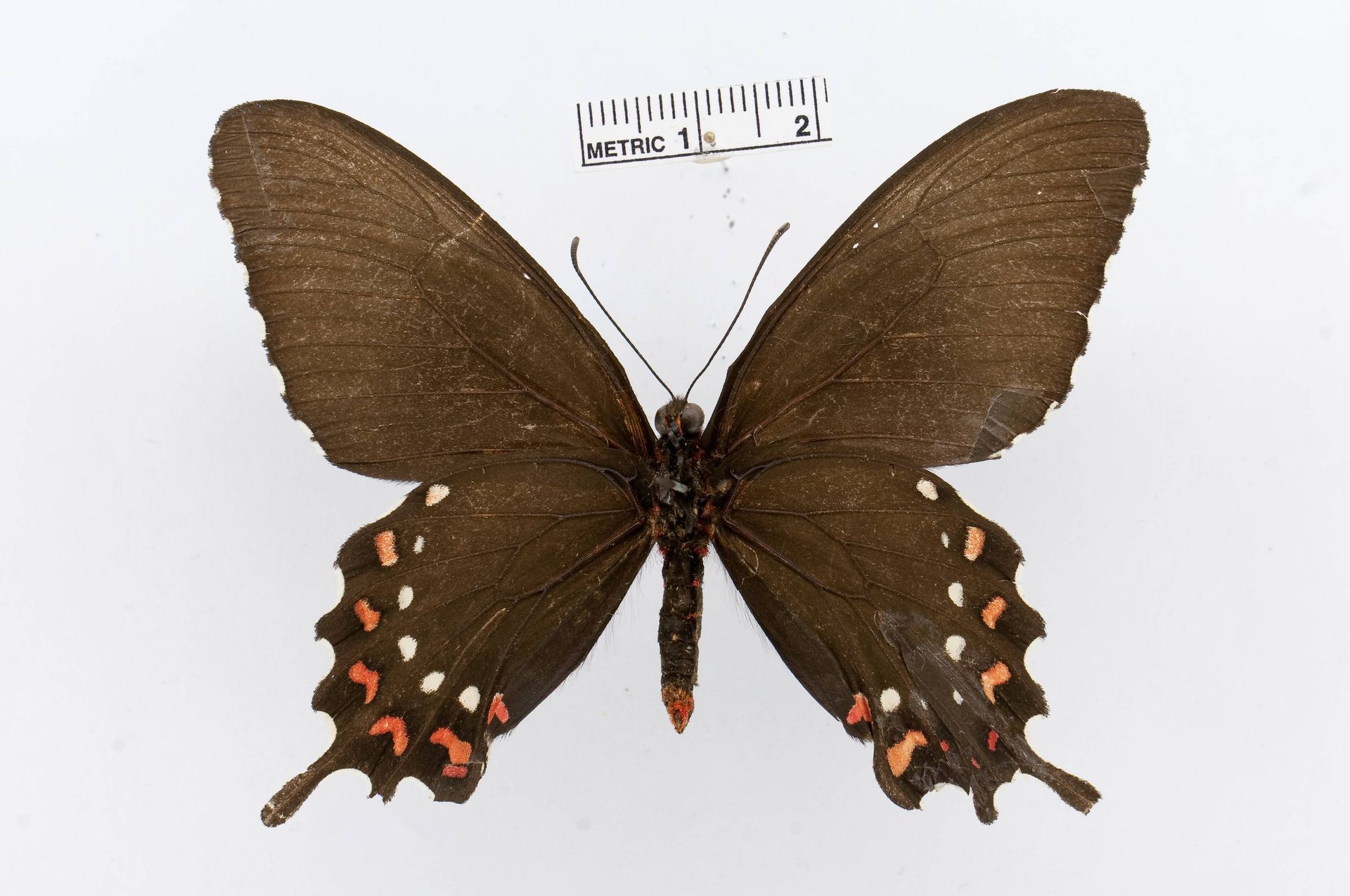
Distinguished from other Parides by the combination of: (1) white submarginal spots on hindwing (not fringe spots), (2) pink outer submarginal spots, and (3) quadrate whitish spot in forewing space 2. The latter trait is diagnostic for the ascanius species group. The similar pipevine swallowtail (Battus philenor) lacks the pink submarginal spots and has different forewing patterning.
Images
Appearance
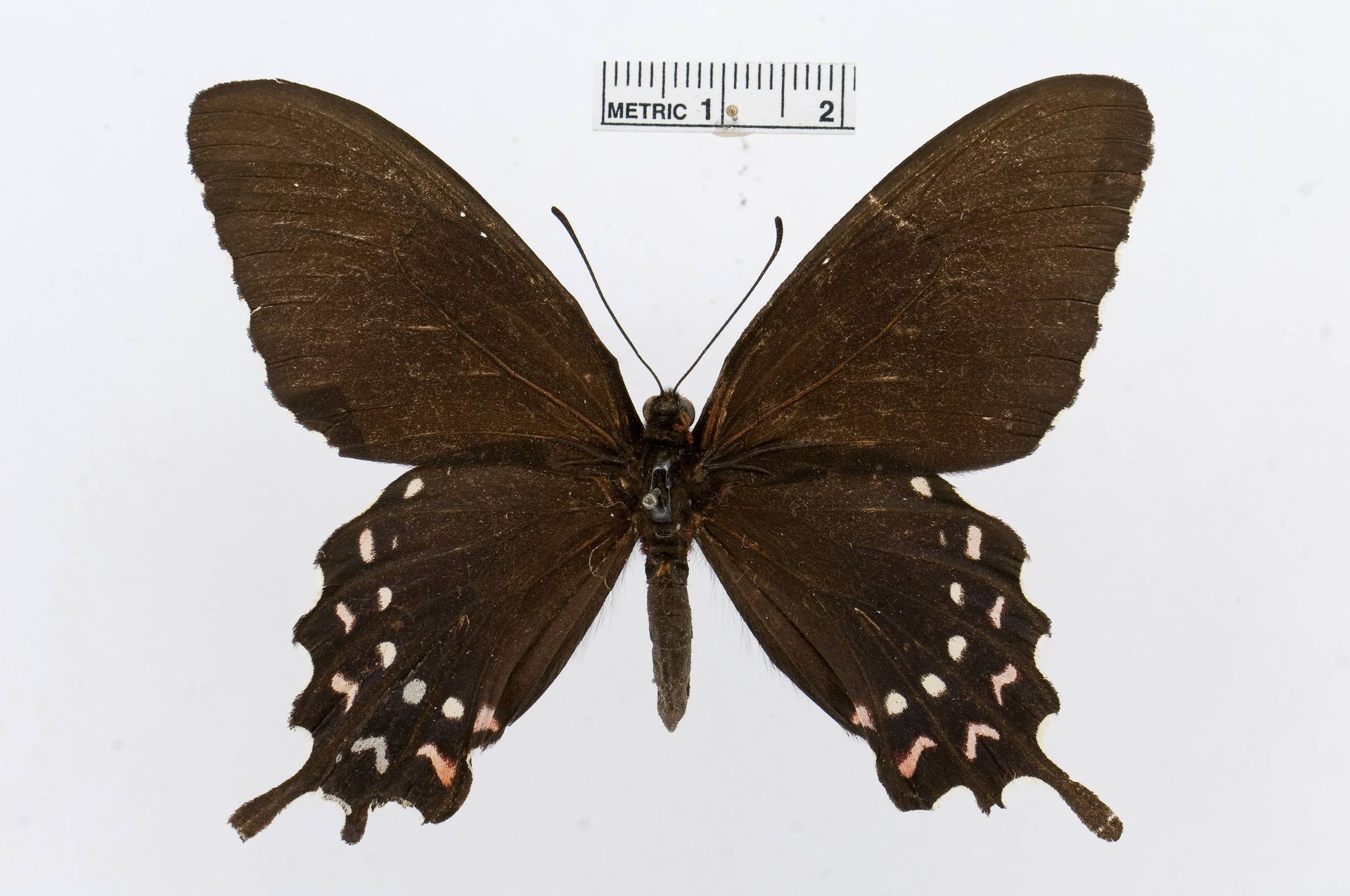
Wingspan 76–89 mm (3–3.5 in). Upperside black with hindwing bearing two rows of submarginal spots: inner row white, outer row pink. Underside similar but with pink spots more conspicuous. Males have fewer white spots than females. Forewing with quadrate whitish spot in space 2, a characteristic of the ascanius group.
Habitat
Pine-oak forests in mountainous regions of Mexico.
Distribution
to Mexico; recorded from multiple states including Chihuahua (MXC), Durango (MXE), Guerrero (MXG), Oaxaca (MXI), Nuevo León (MXN), Sinaloa (MXS), and Tamaulipas (MXT). Single stray record from southeastern Arizona, United States.
Seasonality
observed on the wing from March to November.
Host Associations
- Aristolochia watsonii - larval plantOnly recorded plant; known as Watson's pipevine
Life Cycle
Larva ringed with black and white bands, with yellow and reddish-brown fleshy projections; each side of body with red, orange, and white spots. Chrysalis blue-green with , parts of , and bright yellow-green; shape similar to Battus philenor chrysalis. Whether a brown chrysalis form exists is unknown.
Ecological Role
Larval association with pipevine (Aristolochia) suggests of aristolochic acids, conferring chemical protection against —a trait common in the tribe Troidini.
Similar Taxa
- Battus philenorSimilar chrysalis shape and general appearance, but lacks pink submarginal spots and has different forewing pattern
- Parides ascaniusCongeneric member of same group; shares quadrate whitish spot in forewing space 2 but differs in distribution and spot details
More Details
Conservation status
Uncommon and known from very few localities, but not currently known to be threatened.
Etymology
Specific epithet from classical tradition: Alopius was the son of Antiope, daughter of Thespius.