
Papilio eurymedon
Lucas, 1852
Pale Swallowtail, Pallid Swallowtail
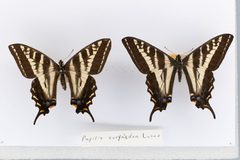
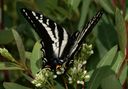
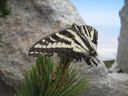
Papilio eurymedon, commonly known as the pale swallowtail or pallid swallowtail, is a native to western North America. It is distinguished from the western tiger swallowtail by its white-cream to very pale yellow coloration. The exhibits single-brooded development across most of its range, with multiple along the Pacific Coast. are active from April through October, with peak abundance in May and July.
Pronunciation
How to pronounce Papilio eurymedon: /pæˈpɪlioʊ juːˈrɪmɪˌdɒn/
These audio files are automatically generated. While they are not always 100% accurate, they are a good starting point.
Identification
Distinguished from Papilio rutulus (western tiger swallowtail) by pale white-cream to very pale yellow coloration versus bright yellow, and by thicker tiger stripes and borders. Red-orange patches above the tail, when present, provide additional diagnostic characters. Similar overall pattern but markedly paler ground color separates it from other western swallowtails.
Images
Habitat
Open woodlands and forest clearings, especially near permanent water bodies such as ponds. Also occurs in urban parks and occasionally in suburban areas.
Distribution
Pacific coast from northern Baja California to southernmost British Columbia. Inland distribution extends to New Mexico and the Black Hills of South Dakota. Present from coast to western Montana, and from Wyoming to northern New Mexico. Absent from most of Nevada and western Utah.
Seasonality
fly from April to October, most abundant in May and July. Single throughout most of range; two or more broods along Pacific Coast.
Diet
sip water from damp soil at puddling parties to obtain nutrients for mating. Larvae feed on leaves of plants including Ceanothus (buckbrush, mountain balm, mountain lilac), red alder, ocean spray, bitter cherry, and serviceberry species.
Host Associations
- Ceanothus - larval Includes buckbrush, mountain balm, and mountain lilac
- Alnus rubra - larval Red alder
- Holodiscus discolor - larval Ocean spray
- Prunus emarginata - larval Bitter cherry
- Amelanchier - larval Serviceberry
Life Cycle
laid singly on plant leaves. Caterpillars are plump green with single yellow band behind and two -shaped spots on upper thorax. Caterpillars turn brown just before fifth moult. Pupae are brown, bark-like in appearance, and overwinter. occurs with tip secured to branch by silk thread, hanging freely upright. emerge following winter .
Behavior
Males perch and patrol for receptive females. Females lay singly on plant leaves. Caterpillars rest on silken mats within shelters of curled leaves. Males participate in puddling parties where up to a dozen or more individuals may gather with other to sip water from damp soil. occasionally visit flowers for nectar.
Ecological Role
. Larvae serve as herbivores consuming leaves of woody shrubs and trees. Prey for various ; larvae employ eyespot displays and osmeterium defense.
Human Relevance
Occasional garden visitor in suburban areas and urban parks. Subject of observation and photography. Not considered economically significant.
Similar Taxa
- Papilio rutulusWestern tiger swallowtail shares range and similar pattern, but distinguished by bright yellow ground color (versus pale white-cream), thinner tiger stripes and borders, and absence of red-orange patches
More Details
Puddling behavior
Males frequently observed in large at damp soil, less common than in western tiger swallowtail but notable when present
Brood variation
Multivoltine along Pacific Coast contrast with inland populations, representing geographic variation in
Sources and further reading
- BugGuide
- Wikipedia
- GBIF taxonomy match
- iNaturalist taxon
- NCBI Taxonomy
- Catalogue of Life
- Bird droppings, snake eyes, dead leaves: Swallowtails, Papilio spp. — Bug of the Week
- Papilionoidea | Blog
- Swallowtails where art thou? Swallowtail butterflies, Papilionidae — Bug of the Week
- Parsley poacher: Black swallowtail caterpillar, Papilio polyxenes — Bug of the Week
- Swallowtail soiree - Papilio glaucus — Bug of the Week
- Swallowtail soiree – Eastern tiger swallowtail, Papilio glaucus — Bug of the Week