
Hermeuptychia hermybius
Grishin, 2014
South Texas Satyr
Hermeuptychia hermybius is a small brown in the Nymphalidae , described in 2014 from Texas and northeastern Mexico. It was discovered through genetic analysis of initially thought to be Carolina Satyr (H. sosybius), revealing cryptic diversity in this well-studied butterfly group. The is closely related to H. sosybius but distinguished by genitalia and sequences.
Pronunciation
How to pronounce Hermeuptychia hermybius: /hɛr.meʊˈptɪki.ə hɛrˈmɪb.iəs/
These audio files are automatically generated. While they are not always 100% accurate, they are a good starting point.
Identification
Distinguished from sympatric H. sosybius by smaller and darker genitalia in both sexes; from H. intricata by closer phylogenetic relationship to H. sosybius and geographic range. Wing patterns alone are insufficient for identification—genitalia examination or analysis required for reliable separation from H. sosybius.
Images
Appearance
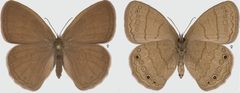
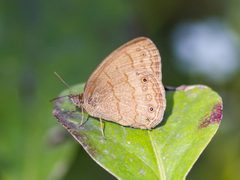
Small brown with forewing length approximately 16 mm. Wing patterns are very similar to Carolina Satyr (H. sosybius), with eyespots along wing edges. Genitalia are smaller and darker than those of H. sosybius, with additional structural differences in both males and females.
Habitat
Recorded from the lower Rio Grande Valley region of Texas, along the Rio Grande from Laredo to the Gulf coast; also in Tamaulipas and San Luis Potosí, Mexico. Specific microhabitat preferences not documented.
Distribution
Southern North America: lower Rio Grande Valley of Texas (USA) and adjacent Mexico (Tamaulipas, San Luis Potosí). Range extends along the Rio Grande from Laredo to the Gulf coast.
Diet
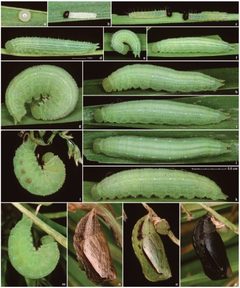
Larvae feed on Panicum maximus.
Similar Taxa
- Hermeuptychia sosybiusVery similar wing patterns; distinguished by larger and paler genitalia, and different sequences. Closely related but distinct .
- Hermeuptychia intricataSimilar wing patterns but more distantly related; distinguished by intricate wing patterns and geographic distribution in eastern USA coastal plains rather than Texas.
More Details
Etymology
The name refers to a fusion of 'herm[es]' (beginning) and '[sos]ybius' (ending), referencing its relationship to Hermeuptychia hermes and H. sosybius.
Discovery context
Discovered during genetic studies of Satyr from South Texas; initially appeared indistinguishable from H. sosybius by wing patterns alone. One of two new Hermeuptychia described simultaneously from eastern USA, highlighting remaining undiscovered diversity in well-studied faunas.
Sources and further reading
- BugGuide
- Wikipedia
- GBIF taxonomy match
- iNaturalist taxon
- NCBI Taxonomy
- Two New Species of Butterfly Accidentally Discovered in Eastern USA
- Uncategorized | Blog - Part 26
- Pensoft Editorial Team | Blog - Part 130
- Pensoft blog - Part 131
- Two new butterfly species discovered in eastern USA | Blog
- Hermeuptychia hermybius Archives - Entomology Today