
Polygonia satyrus
Edwards
Satyr Comma, Satyr Anglewing
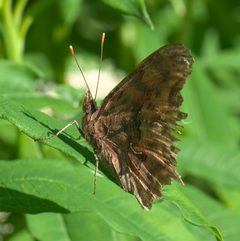
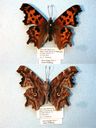
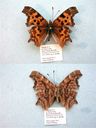
Polygonia satyrus, commonly known as the satyr comma or satyr anglewing, is a North American in the Nymphalidae. It is primarily distributed in western Canada and bears close resemblance to Polygonia comma, with which it is frequently confused. The is locally common within its range. Its caterpillars feed on Urtica gracilis, the American stinging nettle.
Pronunciation
How to pronounce Polygonia satyrus: //pɒlɪˈɡoʊniə ˈsætɪrəs//
These audio files are automatically generated. While they are not always 100% accurate, they are a good starting point.
Identification
Closely resembles Polygonia comma (eastern comma), with which it is frequently confused. Distinct from other Polygonia in its geographic range, being primarily western Canadian.
Images
Distribution
Western Canada; specifically recorded from Alberta, Manitoba, and Saskatchewan. Distribution records also indicate presence in Vermont, USA, though primarily western in occurrence.
Diet
Caterpillars feed on Urtica gracilis (American stinging nettle). diet not specified in available sources.
Host Associations
- Urtica gracilis - larval plantAmerican stinging nettle
Similar Taxa
- Polygonia commaFrequently confused with P. satyrus due to close resemblance; P. comma is the eastern comma with primarily eastern distribution
More Details
Taxonomic Note
The has been referred to as both 'satyr comma' and 'satyr anglewing' in literature. Art Shapiro's monitoring records from California's Central Valley indicate an observation on January 25, 2014, suggesting potential vagrant or broader range occurrence, though this may represent misidentification or exceptional .