
Aglais
Dalman, 1816
Tortoiseshells
Species Guides
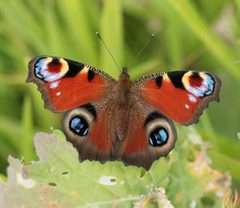
3- Aglais io(European peacock butterfly)
- Aglais milberti(Milbert's Tortoiseshell)
- Aglais urticae(Small Tortoiseshell)
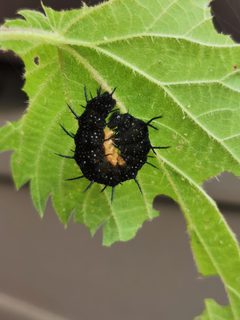
Aglais is a Holarctic of brush-footed butterflies commonly known as tortoiseshells. The genus contains several well-known European including the small tortoiseshell (A. urticae) and the peacock (A. io). Taxonomic placement remains somewhat contentious, with some authorities treating Aglais as a subgenus of Nymphalis rather than a separate genus. Species in this genus are characterized by their distinctive wing patterns and hibernation .
Pronunciation
How to pronounce Aglais: //ˈæɡlaɪəs//
These audio files are automatically generated. While they are not always 100% accurate, they are a good starting point.
Identification
Aglais can be distinguished from other Nymphalidae by their reduced, brush-like front legs that are not used for . The is characterized by medium-sized butterflies with angular wing margins and cryptic underside coloration that aids in camouflage during hibernation. Specific species identification relies on upperside wing patterns: A. io displays prominent eyespots, while A. urticae shows orange and black banding with blue marginal spots. The genus may be difficult to separate from Nymphalis without examination of genitalia or molecular data.
Images
Habitat
occur in diverse including woodland clearings, gardens, city parks, and open vegetated landscapes. Aglais urticae is strongly associated with areas supporting its larval plant Urtica dioica (common nettle), including disturbed ground and anthropogenic habitats. In northeastern Asia, A. urticae has been documented in regions with extreme winter cold, where survival depends on subnivean hibernation sites. Aglais io frequents flowering bushes (Buddleja davidii) in garden settings.
Distribution
Holarctic distribution encompassing Europe, Asia, and North America. Specific records include: Sweden (extensive latitudinal gradient studies), Belgium (citizen science documentation), northeastern Russia including the village of Seimchan, Assam and Himachal Pradesh in India (A. caschmirensis), and Vermont in the United States. The is widely distributed across northern Eurasia with variable presence in North America depending on .
Seasonality
of most overwinter and emerge in spring to reproduce. In Belgium, A. io has recently shifted from to , producing spring, early summer, and autumn peaks. Phenology varies with latitude and climatic conditions; pressure and weather fluctuations can significantly alter seasonal abundance patterns across years.
Diet
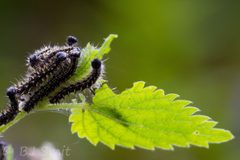
feed on nectar from flowers including Buddleja davidii. Larvae are oligophagous, feeding primarily on Urtica dioica (common nettle) for A. urticae, with occasional use of other plants. Aglais caschmirensis larvae have been exclusively documented on Urtica dioica. Adult A. antiopa (now often placed in Nymphalis) has been observed feeding on oak sap, rotting fruit, and occasionally flower nectar.
Host Associations
- Urtica dioica - larval plantPrimary for A. urticae and A. caschmirensis
- Buddleja davidii - nectar sourceDocumented foraging site for A. io and A. urticae
- Phobocampe confusa - Ichneumonid specializing on Aglais larvae; causes significant mortality
- Parus major - Great tit documented preying on A. io and A. urticae
Life Cycle
Complete with , larva, pupa, and stages. Larvae progress through multiple instars; young A. urticae larvae use smaller plants and feed primarily on leaf blades and tips, while older larvae show broader vertical distribution on nettles. Chrysalises of A. caschmirensis exhibit color (golden, red, green, brown) with golden forms showing highest survival rates. Adults are the stage in most , though hibernation physiology varies geographically. In extremely cold regions, survival requires subnivean shelters rather than exposed .
Behavior
Males exhibit territorial defense of sunlit patches in woodland clearings, chasing intruding males and pursuing females. Territory size correlates positively with male body size. Territorial disputes involve aerial spiraling . are and frequently observed basking with wings open. Some show seasonal altitudinal , with spring breeding at low elevations followed by upslope movement and autumn return migration.
Ecological Role
Larvae function as herbivores on nettles and related plants. serve as and as prey for birds and . The specialized parasitoid Phobocampe confusa depends on Aglais as primary , with rates varying annually based on phenological overlap. Adult butterflies contribute to nutrient transfer between plants and higher in garden, woodland, and anthropogenic .
Human Relevance
Popular and familiar butterflies in European gardens due to distinctive appearance and approachable . Subject of extensive citizen science monitoring, particularly in Belgium where observation.org data documented phenological shifts. Potential non-target organism for Bt maize pollen exposure assessment. State insect of Montana (A. antiopa, though taxonomic placement disputed). Subject of specialized by birds in urban environments.
Similar Taxa
- NymphalisTaxonomically proximate; Aglais sometimes treated as subgenus. Both contain tortoiseshell butterflies with similar and . Separation requires genitalic or molecular examination.
- InachisFormerly included A. io as Inachis io; now generally merged into Aglais. Historical literature may use this name for peacock .
- PolygoniaComma butterflies share similar angular wing margins and hibernation , but distinguished by ragged wing edges and different underside patterns.
More Details
Taxonomic Uncertainty
The generic status of Aglais relative to Nymphalis remains unresolved. NCBI treats Aglais as a subgenus of Nymphalis, while Catalogue of Life and most European sources recognize it as a distinct . This affects , particularly for A. antiopa which is placed in Nymphalis by some authorities.
Chrysalis Color Polymorphism
A. caschmirensis produces chrysalises in four colors (golden, red, green, brown) with differential survival: golden forms survive best, green is rarest, and red forms suffer 100% mortality. This suggests parasitoid pressure may drive phenotypic variation in pupal coloration.
Climate Response
A. io has demonstrably shifted from to in Belgium over recent decades, documented through mass citizen science data. This phenological shift represents a rapid response to environmental change, though the specific drivers (temperature, , availability) remain to be fully elucidated.
Sources and further reading
- BugGuide
- Wikipedia
- GBIF taxonomy match
- iNaturalist taxon
- NCBI Taxonomy
- Catalogue of Life
- Good Day, Mourning Cloak | Bug Squad
- Provisional checklist of European butterfly larval foodplants
- Super Crop Challenge #6 | Beetles In The Bush
- Specialiserad predation av talgoxe Parus major på påfågelöga Aglais io och nässelfjäril Aglais urticae
- New distribution record of Indian Tortoiseshell Aglais caschmirensis aesis (Fruhstorfer, 1912) (Lepidoptera: Nymphalidae) from the state of Assam, India
- Territorial Behaviour of the Nymphalid Butterflies, Aglais urticae (L.) and Inachis io (L.)
- Does the tortoiseshell butterfly, Aglais urticaE (lepidoptera, nymphalidae) shiift to synanthropy in Northeast Asia?
- Feeding Behaviour on Host Plants May Influence Potential Exposure to Bt Maize Pollen of Aglais Urticae Larvae (Lepidoptera, Nymphalidae)
- A detailed study of the variations found in the chrysalises of Aglais caschmirensis Kollar, 1844 (Lepidoptera: Papilionoidea, Nymphalidae)
- Ecology and population genetics of the parasitoid Phobocampe confusa (Hymenoptera: Ichneumonidae) in relation to its hosts, Aglais species (Lepidoptera: Numphalidae)
- Abundant Citizen Science Data Reveal That the Peacock Butterfly Aglais io Recently Became Bivoltine in Belgium