
Chlosyne californica
(W.G. Wright, 1905)
California patch
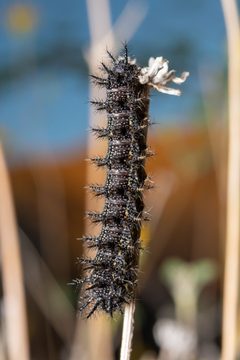
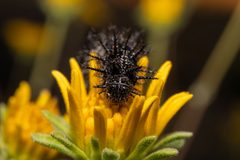
Chlosyne californica, the California patch, is a in the Nymphalidae to the southwestern United States and northwestern Mexico. The inhabits desert washes and canyons, where males employ two distinct mate-locating tactics: territorial defense of perch sites on hilltops and non-territorial patrolling of slopes and washes. feed on flower nectar, while larvae specialize on Parish goldeneye (Bahiopsis parishii) and occasionally consume sunflowers (Helianthus annuus).
Pronunciation
How to pronounce Chlosyne californica: //kləˈzaɪni kælɪˈfɔrnɪkə//
These audio files are automatically generated. While they are not always 100% accurate, they are a good starting point.
Identification
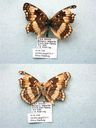
Distinguished from related Chlosyne by the combination of: (1) red spot on hindwing underside near , blending into band; (2) wide yellow-orange median band on upper surface; (3) large orange submarginal spots rather than smaller or more numerous spots. Desert wash and canyon in the Mojave and Sonoran desert regions further supports identification.
Images
Habitat
Desert washes and canyons in arid regions. Associated with riparian corridors and moist drainage areas within otherwise xeric desert environments.
Distribution
Southwestern United States and northwestern Mexico: southern Nevada south through southeastern California to Baja California; southwestern Arizona; Sonora, Mexico.
Diet
feed on flower nectar. Larvae feed primarily on Parish goldeneye (Bahiopsis parishii), with occasional feeding on sunflowers (Helianthus annuus).
Host Associations
- Bahiopsis parishii - larval plantPrimary ; Parish goldeneye
- Helianthus annuus - larval plantOccasional ; sunflower
Life Cycle
Complete with , larval, pupal, and stages. Larvae are spiny and feed gregariously on plants. Specific details not documented in available sources.
Behavior
Males exhibit two alternative mate-locating tactics that coexist within : (1) territorial defense of perch sites on hilltops, and (2) non-territorial patrolling of slopes and washes. Patrolling occurs primarily during periods of high and peaks several hours after territorial males reach maximum . Individual males demonstrate behavioral flexibility, with some marked individuals observed using both tactics. Patrolling is not a subordinate strategy for unsuccessful territorial males; patrollers are not smaller than territorial males and likely represent a supplement to hilltopping rather than an inferior substitute, as patrolling coincides with higher temperatures and greater abundance of foraging, sexually receptive females.
Ecological Role
function as while nectaring. Larvae serve as herbivores on desert shrub vegetation. Specific contributions beyond these general roles not documented.
Similar Taxa
- Chlosyne laciniaSimilar larval and plant associations; both feed on Asteraceae and occur in southwestern North America
More Details
Behavioral plasticity
The coexistence of two distinct male mate-locating tactics within , with individual males capable of switching between tactics, represents a documented case of behavioral flexibility in Lepidoptera.
Sources and further reading
- BugGuide
- Wikipedia
- GBIF taxonomy match
- iNaturalist taxon
- NCBI Taxonomy
- The Big 43: The California Native Plants, Plus One, Studied in UC Davis Research | Bug Squad
- Bohart Museum: Learn about California's State Insect on UC Davis Picnic Day | Bug Squad
- A Mural Like No Other | Bug Squad
- A Flash of Orange: Welcome, California Tortoiseshell! | Bug Squad
- California Dogface Butterfly: What the Fire Did | Bug Squad
- Bembicid Holdings | Entomology Research Museum
- Alternative Mate‐locating Tactics in Chlosyne californica (Lepidoptera, Nymphalidae)