
Adelpha basiloides
(Bates, 1865)
spot-celled sister
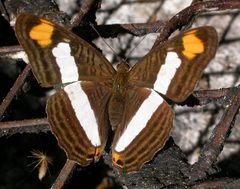
Adelpha basiloides is a in the Nymphalidae, commonly known as the spot-celled sister. It belongs to the Adelpha, a group of butterflies often called admirals or sisters. The is found in North and Central America. The specific epithet and reference distinctive wing pattern characteristics.

Pronunciation
How to pronounce Adelpha basiloides: /əˈdɛlfə ˌbæsɪˈlɔɪdiːz/
These audio files are automatically generated. While they are not always 100% accurate, they are a good starting point.
Identification
The "spot-celled sister" suggests diagnostic wing pattern features involving spots on the wing , though specific identification details are not documented in available sources. As with other Adelpha , likely exhibit the characteristic orange-brown and black wing patterns with white bands typical of the , but distinguishing A. basiloides from requires examination of wing spot patterns in the .
Images
Distribution
North America and Central America. GBIF records indicate presence in North America.
More Details
Taxonomic history
Originally described as Heterochroa basiloides by H.W. Bates in 1865, later transferred to Adelpha. The genus Adelpha was formerly treated as a subgenus of Limenitis, and some sources still reflect this placement.
Hodges number
The has been assigned MONA/Hodges number 4527 in North American lepidopteran classification systems.