
Marpesia zerynthia
Hübner, 1823
Waiter, Waiter Daggerwing
Marpesia zerynthia, commonly known as the waiter or waiter daggerwing, is a Neotropical in the Nymphalidae. The is named for its distinctive wing shape and . are known for gathering in small groups at wet sand and mud to extract moisture and minerals, a behavior called "puddling." The species exhibits a unique thermoregulatory behavior called "pumping," where butterflies rapidly imbibe and expel water. Development from to adult takes 32 days or less under favorable conditions.
Pronunciation
How to pronounce Marpesia zerynthia: /mɑːrˈpiːziə zəˈrɪnθiə/
These audio files are automatically generated. While they are not always 100% accurate, they are a good starting point.
Identification
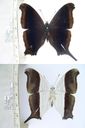
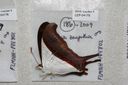
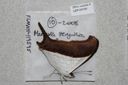
Distinguished from other daggerwings by combination of dark brown surface with paler margins and white inner section on surface. Long, slender hindwing tail characteristic of Marpesia. Can be separated from Marpesia petreus (ruddy daggerwing) by color pattern: M. zerynthia has dark brown dorsal surface rather than orange-brown. Ventral surface pattern of white inner section and dark brown margins differs from similar . Males often encountered in groups at wet ground, that aids identification.
Images
Habitat
Inhabits tropical deciduous and evergreen forests, including open areas within forest. Primarily a cloud-forest , most common between 800–1,800 m elevation. Occurs at altitudes up to 2,400 m. Favored feeding locations include shallow fords in streams and wet areas along mountain roads.
Distribution
. South America: Peru, Bolivia, Colombia, northern Brazil. Mesoamerica: central Mexico southward. Vagrants rarely observed as far north as Texas, United States.
Seasonality
In Mexico, flies from May to November. In South Texas, flies from July to October.
Diet
Larvae feed on leaves of Moraceae trees and shrubs, including Ficus (figs), Chlorophora, Brosimum, and Artocarpus. obtain nutrition from nectar of Cordia and Croton, and from excrement and various non-floral sources. Adults also gather at wet sand and mud to drink moisture rich in minerals.
Host Associations
- Ficus - larval figs, in Moraceae
- Chlorophora - larval in Moraceae
- Brosimum - larval in Moraceae
- Artocarpus - larval in Moraceae
- Cordia - nectar source
- Croton - nectar source
Life Cycle
laid singly on leaves of plants. produces young caterpillars that feed diurnally on upper leaf surfaces. Larval development includes colorful mature stage with defensive spines. in angular green chrysalis with projecting spines. Complete development from egg to takes 32 days or less.
Behavior
typically encountered in small groups of 6–12 males attracted to wet sand and mud to drink mineral-rich moisture. During hot weather, flutter constantly and feed with wings erect or partially open. In cooler conditions, hold wings completely outspread for insolation. Adults fly quickly and nimbly, often perching together in small groups under leaves. Females more elusive, rarely descending from forest ; occasionally settle on lower foliage in overcast weather. Larvae rest on upper leaf surfaces and feed diurnally. When disturbed, larvae violently move spiny from side to side until disturbance ceases. Larvae are indiscriminately intolerant of intruders, including conspecifics. Adults exhibit "pumping" : rapidly imbibing water through and expelling it from , possibly for .
Ecological Role
Larval herbivore on Moraceae. of Cordia and Croton. Adults contribute to nutrient cycling through consumption of excrement and decaying matter. Part of as prey for various ; larvae possess defensive spines suggesting pressure.
Human Relevance
Subject of ecological and behavioral research, particularly regarding thermoregulatory "pumping" . Attracted to wet areas and puddles, making it observable for watchers. No significant agricultural impact. Two recognized: M. z. zerynthia (Brazil: Bahia) and M. z. dentigera (Texas to Colombia, Peru, possibly Ecuador).
Similar Taxa
- Marpesia petreusSimilar long-tailed hindwing shape, but M. petreus has orange-brown surface rather than dark brown; pattern differs
- Marpesia chironAnother daggerwing with similar wing shape, but coloration and distribution differ
More Details
Pumping behavior
exhibit poorly understood 'pumping' where they rapidly imbibe water and expel it from the approximately once every five seconds. Hypothesized functions include or internal cleansing, though definitive explanation remains unknown.
Subspecies
M. z. zerynthia occurs in Bahia, Brazil. M. z. dentigera (Fruhstorfer, 1907) ranges from Texas to Colombia, Peru, and possibly Ecuador.
Sources and further reading
- BugGuide
- Wikipedia
- GBIF taxonomy match
- iNaturalist taxon
- NCBI Taxonomy
- Butterflies pumping on the beach: Daggerwings, Marpesia sp. — Bug of the Week
- Beautiful butterflies pumping water: Daggerwings, Marpesia spp., and a pierid butterfly, Cepora spp. — Bug of the Week
- Bug of the Week Academy Awards 2018 — Bug of the Week
- Archive — Bug of the Week