
Cyanophrys herodotus
(Fabricius, 1793)
Tropical Greenstreak, Tropical Green Hairstreak
Cyanophrys herodotus is a small Neotropical (Lycaenidae) described by Fabricius in 1793. It ranges from Mexico through Central America to Argentina, with rare strays reaching southern Texas. The inhabits open disturbed areas in tropical and subtropical forests at 600–2,000 m elevation, where feed on flower nectar and larvae feed on leaves and flowers of various shrubs and trees.
Pronunciation
How to pronounce Cyanophrys herodotus: /saɪəˈnɒfrɪs hɪˈrɒdətəs/
These audio files are automatically generated. While they are not always 100% accurate, they are a good starting point.
Identification
Distinguished from other green hairstreaks by combination of Neotropical distribution, small size (22–29 mm wingspan), and presence in open disturbed forest at mid-elevations. The green upper wing surface and tailed hindwings separate it from non- lycaenids. In southern Texas, rare strays may be confused with resident green hairstreaks but occur later in season (May–October) and are less frequently encountered.
Images
Appearance
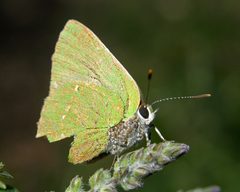
Small with wingspan 22–29 mm. Upper surface of wings green; undersurface with characteristic pattern. Hindwings possess thin tail-like projections typical of the Theclinae. Overall coloration provides camouflage in green vegetation.
Habitat
Open disturbed areas within tropical and subtropical rainforests and cloud forests. Occurs at elevations from 600 to approximately 2,000 meters. include forest edges, clearings, and other anthropogenically modified areas within forested landscapes.
Distribution
Native range extends from Mexico through Central America (Guatemala, Panama, Nicaragua) and South America (Colombia, Ecuador, Peru, Bolivia, Brazil, Paraguay, Argentina). Rare strays documented in southern Texas, USA, representing northernmost vagrant occurrences.
Seasonality
on wing year-round in Central America and Mexico. In southern Texas, adults active from late May to late October.
Diet
feed on flower nectar. Larvae feed on leaves and flowers of various shrubs and trees including camara, Cornutia grandifolia, Clerodendron paniculatum, Lithraea brasiliensis, Schinus molle, Mangifera indica, and Mikania .
Host Associations
- Lantana camara - larval food plantleaves and flowers
- Cornutia grandifolia - larval food plantleaves and flowers
- Clerodendron paniculatum - larval food plantleaves and flowers
- Lithraea brasiliensis - larval food plantleaves and flowers
- Schinus molle - larval food plantleaves and flowers
- Mangifera indica - larval food plantleaves and flowers
- Mikania - larval food plantleaves and flowers; -level record
Life Cycle
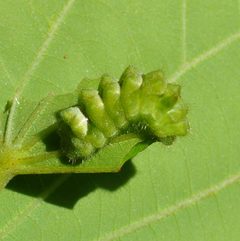
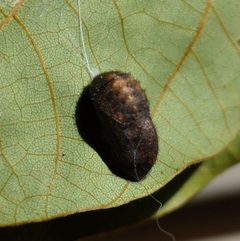
Complete with , larva, pupa, and stages. Larvae feed on leaves and flowers of plants. Adults emerge and feed on flower nectar. Specific details of egg placement, site, and time not documented in available sources.
Ecological Role
function as while feeding on nectar. Larvae serve as herbivores, consuming leaves and flowers of plants. Specific ecological interactions beyond herbivory and pollination not documented.
Human Relevance
Occasional attraction to cultivated plants including mango (Mangifera indica) and (Lantana camara), which serve as larval . Rare stray individuals occasionally observed by lepidopterists in southern Texas. No significant economic or conservation concerns documented.
Similar Taxa
- Other Cyanophrys speciesShare green coloration and tailed hindwings; distinguished by geographic range and specific preferences where ranges overlap
- Chlorostrymon simaethis (Silver-banded Hairstreak)Overlaps in range and ; distinguished by presence of silver band on hindwing underside and different plant associations
- Other Theclinae hairstreaksShare tail-like hindwing projections; distinguished by coloration, size, and specific wing pattern elements
More Details
Taxonomic History
Originally described as Hesperia herodotus by Fabricius in 1793. Later transferred to Thecla, and currently placed in Cyanophrys. The specific epithet references the Greek historian Herodotus, though the reason for this naming choice is not documented in available sources.
Elevation Range
The documented elevation range of 600–2,000 meters suggests the is primarily mid-elevation, avoiding both lowland tropical forests and high montane regions. This may reflect thermal preferences or plant distribution patterns.