
Allosmaitia
Clench, 1964
Species Guides
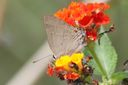
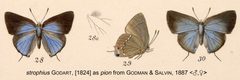
1- Allosmaitia strophius(Strophius Hairstreak)
Allosmaitia is a of Neotropical butterflies in the Lycaenidae, Theclinae. The genus was established by Clench in 1964 and contains five recognized distributed across Central and South America. Members are placed in the tribe Eumaeini, a diverse group of small to medium-sized lycaenids. The genus has accumulated 371 observations on iNaturalist, indicating moderate documentation of its occurrence.
Pronunciation
How to pronounce Allosmaitia: //əˌloʊsˈmaɪtiə//
These audio files are automatically generated. While they are not always 100% accurate, they are a good starting point.
Identification
Allosmaitia can be distinguished from related by genitalic characters, particularly male claspers and structure, which formed the basis for Clench's 1964 generic revision. External shows the typical Eumaeini pattern of slender bodies, relatively short with white-ringed clubs, and hindwings bearing thin tail-like projections on the margin. Specific species-level identification requires examination of wing pattern details, particularly the arrangement of orange and dark markings on the hindwing underside, and often necessitates dissection or reference to original descriptions.
Images
Distribution
The occurs throughout the , with documented from Mexico through Central America to South America. Individual species show varying ranges: Allosmaitia coelebs and A. strophius have broad distributions across multiple countries, while others appear more restricted. Precise range boundaries for most species remain poorly documented due to limited collecting and taxonomic study.
Similar Taxa
- TmolusBoth belong to Eumaeini and share similar wing patterns with orange marginal markings; Allosmaitia was separated from Tmolus and related based on male genitalia structure, particularly the shape of the clasper and
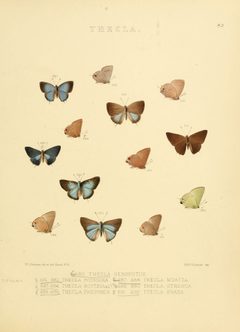
- TheclaHistorical confusion in generic limits; Allosmaitia were formerly placed in Thecla or related , and superficial resemblance in wing pattern exists, though Allosmaitia lacks the more pronounced seen in many Thecla species
- RekoaAnother Eumaeini with similar size and general appearance; Rekoa typically shows more prominent metallic blue or green iridescence on the upperside and different hindwing tail proportions
More Details
Taxonomic history
The was erected by Harry Kendon Clench in 1964 to accommodate previously assigned to Thecla and related genera, based on a comprehensive revision of Neotropical Eumaeini. The type species is Allosmaitia coelebs (Herrich-Schäffer, 1862).
Species composition
Five are currently recognized: A. coelebs, A. fidena, A. myrtusa, A. piplea, and A. strophius. The group has received limited modern taxonomic attention, and species boundaries may warrant re-examination with molecular data.
Research needs
Basic natural history information—including larval plants, stages, and precise associations—is unknown or undocumented for all in this . Field observations with photographic documentation of and habitat use would significantly improve understanding.