
Pyrrhopygini
Firetips, Firetail skippers
Genus Guides
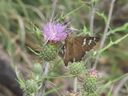
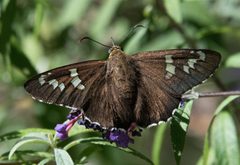
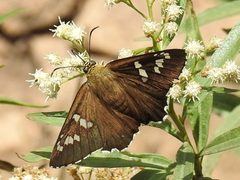
2Pyrrhopygini is a tribe of comprising approximately 150 , commonly known as firetips or firetail skippers. The tribe is distinguished by the red or orange abdominal tip present in many species. Members are exclusively Neotropical in distribution, with a single species extending marginally into the southern United States. They belong to the Hesperiidae and Pyrrhopyginae.
Pronunciation
How to pronounce Pyrrhopygini: //ˌpɪ.ɹoʊˈpaɪ.d͡ʒəˌnaɪ//
These audio files are automatically generated. While they are not always 100% accurate, they are a good starting point.
Identification
Distinguished from other skipper tribes by the combination of robust body, broad wings, and frequently present red or orange abdominal tuft. The metallic thoracic coloration separates them from most other Hesperiidae tribes except related Pyrrhopyginae. The single reaching the United States (Pyrrhopyge zenodorus) can be identified by its northward range extension.
Images
Appearance
Medium to large skippers with robust bodies and relatively broad wings. Many exhibit metallic blue or green coloration on the and wing bases. The frequently terminates in a conspicuous red or orange tuft, the namesake 'firetip' trait. Wing patterns vary but often include bold contrasting markings of black, white, and metallic .
Habitat
Tropical and subtropical forests, forest edges, and disturbed with woody vegetation. Many are associated with primary or secondary forest environments.
Distribution
Neotropical region from Mexico through Central America and South America to northern Argentina. One , Pyrrhopyge zenodorus, extends into southern Arizona and Texas in the United States.
Similar Taxa
- Hesperiinae (grass skippers)Lack the metallic thoracic coloration and red abdominal tip; generally smaller with more angular wings
- Eudaminae (dicot skippers)Differ in wing venation and lack the characteristic robust body with metallic ; no red abdominal tuft
More Details
Systematic note
Pyrrhopygini is the sole tribe within Pyrrhopyginae, making the tribe and subfamily coextensive in content. The classification has been stable, though generic-level revisions continue.