
Eantis pallida
(Felder, 1869)
Pale Sicklewing
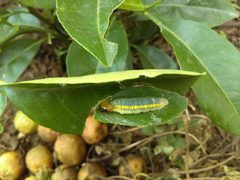
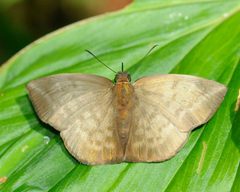
Eantis pallida is a ( Hesperiidae) commonly known as the Pale Sicklewing. The was first described by Felder in 1869 and has undergone taxonomic revisions, with some authorities placing it in the Achlyodes. It occurs in the Americas, with documented presence in Colombia and North America. The refers to the characteristic sickle-shaped wing appearance typical of this group.
Pronunciation
How to pronounce Eantis pallida: /ˈiː.æn.tɪs ˈpæl.ɪ.də/
These audio files are automatically generated. While they are not always 100% accurate, they are a good starting point.
Images
Distribution
Documented from Colombia (Nariño department, San Isidro, Reserva Natural La Planada; Manizales) and North America. GBIF records indicate presence in these regions, though specific range boundaries remain incompletely documented.
Host Associations
- Astragalus lentiginosus - plant blister beetles (Meloe franciscanus) feed exclusively on leaves; this association is documented for the Mojave National Preserve of related - system, not directly for E. pallida
Similar Taxa
More Details
Taxonomic Note
The has experienced taxonomic instability. GBIF lists Eantis pallida as a synonym of Achlyodes pallida, while NCBI and iNaturalist maintain it under Eantis. The 2019 revision by Cong, Zhang, Shen & Grishin transferred the species to Achlyodes, but this placement is not universally adopted.
Sources and further reading
- BugGuide
- GBIF taxonomy match
- iNaturalist taxon
- NCBI Taxonomy
- Those Incredible Digger Bees and Their Nest Parasites | Bug Squad
- Bees, Parasites and Maybe the End? | Bug Squad
- The Amazing Bee-Parasite Research of Leslie Saul-Gershenz | Bug Squad
- A Silver Digger Bee in Flight at Bodega Head | Bug Squad
- Congrats to Our UC Davis Nematologists! | Bug Squad
- Why Silver Digger Bees Are Like Gold | Bug Squad