
Lerema ochrius
Grishin, 2023
Ocherous Skipper
Lerema ochrius is a of in the Hesperiidae, described by Grishin in 2023. The species was recently separated from related based on genetic and morphological evidence. It is known from the southern United States and Mexico.


Pronunciation
How to pronounce Lerema ochrius: /lɛˈriːmə ˈɒkriəs/
These audio files are automatically generated. While they are not always 100% accurate, they are a good starting point.
Identification
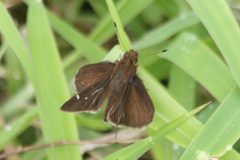
The ocherous to yellow-orange patch on the hindwing is the primary field mark distinguishing Lerema ochrius from the similar Lerema laccus (Laccus Skipper), which lacks this coloration and shows more uniform brownish ventral surfaces. Lerema ochrius also tends to have slightly more contrasting wing patterns. Genitalia examination or may be required for definitive identification in some cases, particularly for worn specimens.
Images
Habitat
Grassland and open woodland , including prairies, savannas, and grassy clearings. Often associated with areas supporting larval grasses.
Distribution
Southern United States (Texas, Oklahoma, and adjacent states) south through eastern and central Mexico.
Seasonality
have been observed from spring through fall, with peak activity in summer months. Multiple are likely given the extended period.
Host Associations
- Poaceae - larval Larvae feed on grasses, though specific have not been documented for L. ochrius. Related Lerema species use various Poaceae.
Behavior
are rapid, darting fliers typical of skippers. They frequently perch on low vegetation with wings held in a characteristic 'jet plane' posture, forewings partially open and hindwings flat. Males are known to establish and defend territories.
Ecological Role
may visit flowers for nectar, potentially serving as . Larvae function as primary consumers, grazing on grasses.
Human Relevance
Of minor interest to enthusiasts and researchers studying skipper . The ' recent description highlights ongoing taxonomic refinement in the Hesperiidae.
Similar Taxa
- Lerema laccusOverlaps in range and general appearance; distinguished by lack of ocherous hindwing patch and more uniform brown coloration below.
- Lerema acciusFormerly considered or closely related; now separated based on genetic and morphological data, with subtle differences in wing pattern and genitalia.