
Oligoria
Scudder, 1872
Twin-spot skipper
Species Guides
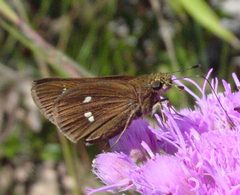
1- Oligoria maculata(Twin-spot Skipper)
Oligoria is a of skippers in the Hesperiidae, containing only the Oligoria maculata, commonly known as the twin-spot skipper. The genus was established by Scudder in 1872. The sole species is restricted to the southeastern United States, with coastal and Gulf distribution patterns.


Pronunciation
How to pronounce Oligoria: /ɔlɪˈɡɔriə/
These audio files are automatically generated. While they are not always 100% accurate, they are a good starting point.
Identification
The is represented by a single , Oligoria maculata, which can be distinguished from other Hesperiidae by the presence of two distinct dark spots on the forewing, giving rise to its . As a genus, identification at the genus level is effectively synonymous with recognition of this species.
Images
Habitat
Coastal and near-coastal environments in the southeastern United States, including maritime forests, coastal scrub, and adjacent open areas. Associated with sandy substrates and vegetation typical of the Atlantic and Gulf coastal plains.
Distribution
United States: coastal North Carolina south through Florida and west along the Gulf Coast to east Texas. Strays have been documented as far north as Pennsylvania, Maryland, and New Jersey.
Host Associations
- unknown - larval plantSpecific larval plants for Oligoria maculata have not been definitively documented in available sources.
Similar Taxa
- Other Hesperiinae generaOligoria is distinguished by its status and restricted southeastern coastal distribution. Similar skippers in the region lack the characteristic twin forewing spots of O. maculata.
More Details
Taxonomic status
Oligoria is a , meaning it contains only one recognized . This is a relatively uncommon condition within the diverse Hesperiidae.