
Hesperia ottoe
Edwards, 1866
Ottoe skipper
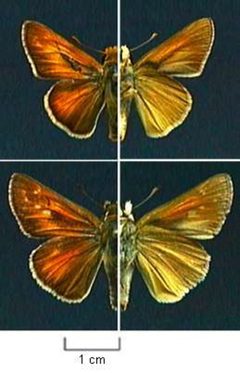
Hesperia ottoe, the Ottoe skipper, is a small in the Hesperiidae to mixed-grass prairies of central North America. It has been assessed as an due to loss and degradation. The has one per year and cannot survive in developed or agricultural landscapes.
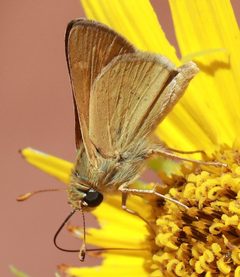
Pronunciation
How to pronounce Hesperia ottoe: //hɛˈspɛɹiə ˈɒt.oʊ.i//
These audio files are automatically generated. While they are not always 100% accurate, they are a good starting point.
Identification
Differs from similar skippers by its restriction to intact mixed-grass prairie and specific period from mid-June to early August. Detailed wing pattern characters for field identification require additional sources.
Images
Habitat
Native to mixed-grass prairies. Requires intact prairie vegetation; unable to survive in altered such as developed or agricultural land. Light grazing can create optimal conditions, but improper grazing management degrades habitat suitability.
Distribution
Central United States, with a single Canadian record from a small area of southern Manitoba. Absent from Saskatchewan despite some database records.
Seasonality
period from mid-June to early August. emerge in late June to mid-July. One per year.
Diet
Larvae feed on Poaceae including little bluestem (Andropogon scoparius), big bluestem (Andropogon gerardi), and Leptoloma cognatum. In Minnesota, larvae have been observed feeding on purple coneflower (Echinacea angustifolia) flowers. feed on nectar from plants including bergamot (Monarda fistulosa) and milk thistle (Carduus nutans).
Host Associations
- Andropogon scoparius - larval food plantlittle bluestem
- Andropogon gerardi - larval food plantbig bluestem
- Leptoloma cognatum - larval food plant
- Echinacea angustifolia - larval food plantflowers only; Minnesota
- Monarda fistulosa - nectar sourcebergamot
- Carduus nutans - nectar sourcemilk thistle
Life Cycle
stage lasts 12–13 days. Instars 1–3 occur over 27–58 days. Instars 4–5 last 14–36 days. Larva overwinters as 5th instar within grass litter for six months. Instars 6–7 occur over 25–38 days before , which lasts 12–19 days. One per year; not migratory.
Behavior
Males exhibit two mating strategies: perching on flowers to wait for females, and active searching. Mating occurs immediately upon female descent to a plant. Polygynous mating system: females typically mate once, males mate multiply. Females oviposit 180–250 per season on suitable plants. Larvae construct leaf-tied nests at the base of host plants while feeding.
Ecological Role
Herbivore in prairie . Larval feeding on native grasses; pollination of prairie forbs. Serves as prey for crab spiders, ambush bugs, robber flies, birds, , and ants.
Human Relevance
Subject to conservation concern due to endangered status. Vulnerable to destruction from development, agricultural conversion, and aggregate mining. Fire management of prairies risks extirpation of small local .
Similar Taxa
- Other Hesperia speciesSimilar and preferences; distinguished by specific period, plant associations, and geographic range
- Other prairie skippersOverlap in use; H. ottoe distinguished by mixed-grass prairie specificity and detailed traits
More Details
Conservation Status
Assessed as endangered. Primary is unprotected and at risk from multiple anthropogenic threats. Light grazing can benefit , but fire management requires careful timing to avoid local extirpation.
Reproductive Output
Females produce 180–250 per mating season, ovipositing on plants that will support larval development after hatching.