
Chioides
Lindsey, 1921
Species Guides
2- Chioides albofasciatus(white-striped longtail)
- Chioides zilpa(Zilpa Longtail)
Chioides is a Neotropical of established by Lindsey in 1921. The genus comprises approximately ten recognized distributed from the southwestern United States through Central America to Argentina, with several species to the Antilles. Members are characterized by robust bodies and distinctive hindwing tails, typical of the Eudaminae. The genus is well-represented in biodiversity databases with over 10,000 observations recorded.
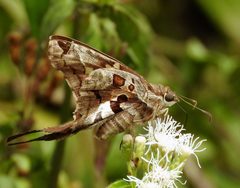
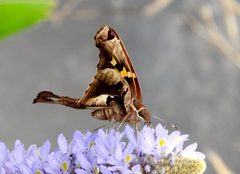
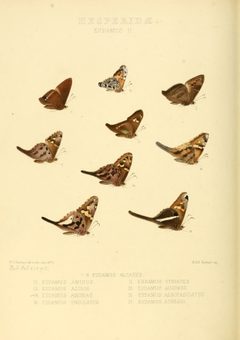
Pronunciation
How to pronounce Chioides: //ˈkaɪ.oʊˌdiːz//
These audio files are automatically generated. While they are not always 100% accurate, they are a good starting point.
Identification
Distinguished from other Eudaminae by combination of robust body and well-developed hindwing tails. Similar to Urbanus and other tailed skippers but differs in specific wing pattern elements and genitalic structure (male claspers and female signa). -level identification requires examination of wing pattern details: white transverse bands in C. albofasciatus, marbled brown-and-white in C. marmorosa, plain gray in C. cinereus. Antillean endemics restricted to island distributions.
Images
Appearance
Robust-bodied skippers with prominent hindwing tails. Wing patterns vary by , including white fasciae (Chioides albofasciatus), marbled patterns (Chioides marmorosa), and grayish tones (Chioides cinereus). Overall build is sturdy compared to many hesperiid .
Habitat
Occupies diverse Neotropical environments from arid southwestern U.S. scrublands through tropical forests to subtropical zones in Argentina. Specific preferences vary by ; some occur in dry, open areas while others inhabit forest edges and clearings.
Distribution
Range extends from southwestern United States (Arizona, Texas, New Mexico) south through Mexico and Central America to Argentina. Includes several Antillean restricted to Caribbean islands. Absent from temperate South America south of approximately 35°S.
Seasonality
activity patterns vary by latitude and ; year-round possible in tropical lowlands, seasonal in subtropical and temperate portions of range. Specific undocumented for most species.
Behavior
Rapid, darting typical of skippers. Perching on vegetation with wings partially open. Detailed behavioral observations for most remain undocumented.
Ecological Role
likely function as in Neotropical . Larval plant relationships poorly documented; potential roles as herbivores unquantified.
Human Relevance
Subject of lepidopterological research and citizen science documentation. No documented economic importance or conservation concern at level. Featured in barcode of life initiatives.
Similar Taxa
- UrbanusAlso Eudaminae with hindwing tails; differs in more slender body build and typically different wing pattern orientation
- AstraptesEudaminae skippers with tails; Chioides distinguished by more robust and specific wing venation
- ProteidesTailed skipper ; Chioides differs in wing shape and pattern elements
More Details
Taxonomic History
Originally described by Lindsey in 1921. Placement in Eudaminae (formerly considered part of Pyrginae) reflects modern phylogenetic understanding of Hesperiidae relationships.
Species Diversity
Ten currently recognized, though taxonomic boundaries of some Antillean endemics may warrant further study. Chioides catillus and C. albofasciatus are among the most widespread and frequently observed.
Research Needs
Larval plants documented for few ; data generally lacking. Phylogenetic relationships within and to other Eudaminae require molecular investigation.