
Garella nilotica
(Rogenhofer, 1881)
Black-olive Caterpillar Moth, Bungee Caterpillar
A small of the Nolidae with a pantropical distribution spanning North America, the Caribbean, Europe, and Pacific islands. The is known for its larvae, which feed on a broad range of woody plants across at least five plant families. First described by Alois Friedrich Rogenhofer in 1881, it has become established in numerous regions through human-mediated transport or natural .
Pronunciation
How to pronounce Garella nilotica: //ɡəˈrɛlə nɪˈlɒtɪkə//
These audio files are automatically generated. While they are not always 100% accurate, they are a good starting point.
Identification
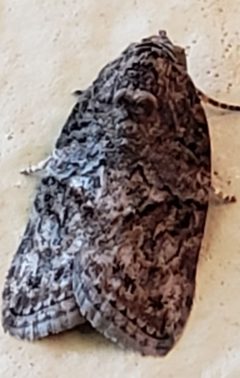
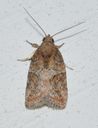
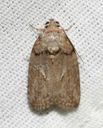
The small size (15 mm wingspan) and pantropical distribution pattern may help distinguish it from regional Nolidae , though specific diagnostic features for field identification are not documented in available sources. Larvae are recognized by their distinctive 'bungee' dropping when disturbed.
Images
Habitat
Associated with broad-leaved trees and shrubs in at least five plant . Occurs in regions supporting plants including Cynometra, Heritiera, Mangifera, Terminalia, Rhododendron, Bucida, Canocarpus, Olea, Prunus, Salix, and Tamarix . Specific types (forest, urban, coastal) are not explicitly differentiated in sources.
Distribution
Pantropical distribution including: eastern North America (Ontario, Quebec, Nova Scotia, New York south to Florida and Texas), Caribbean, Iberian Peninsula, Australia, Guam, Fiji, Samoa, Galápagos Islands, and Chagos Archipelago. GBIF records also indicate presence in Africa and Middle America.
Diet
Larvae feed on various trees and shrubs in at least five of broad-leaved plants, specifically documented on: Cynometra, Heritiera, Mangifera, Terminalia, Rhododendron, Bucida (including B. buceras), Canocarpus, Olea, Prunus, Salix, and Tamarix . feeding habits are not documented.
Host Associations
- Cynometra - larval food plant Fabaceae
- Heritiera - larval food plant Malvaceae
- Mangifera - larval food plant Anacardiaceae; includes mango
- Terminalia - larval food plant Combretaceae
- Rhododendron - larval food plant Ericaceae
- Bucida - larval food plant Combretaceae; specifically B. buceras documented
- Canocarpus - larval food plant
- Olea - larval food plant Oleaceae; includes olive
- Prunus - larval food plant Rosaceae
- Salix - larval food plant Salicaceae; willows
- Tamarix - larval food plant Tamaricaceae; tamarisks
Behavior
Larvae exhibit a distinctive defensive of dropping from plants on silk threads and hanging suspended, earning the 'bungee caterpillar'. This allows them to escape and later climb back to the foliage.
Ecological Role
As a herbivore on broad-leaved woody plants, larvae likely function as a folivore in diverse . The ' wide range and geographic distribution suggest it may play a role in nutrient cycling through herbivory across multiple vegetation types.
Human Relevance
Potential minor pest of cultivated trees including mango (Mangifera) and olive (Olea), though economic impact is not quantified in available sources. The has been transported to numerous islands and regions, likely through human activity.
Similar Taxa
- Other Nolidae speciesSimilar small size and general ; specific distinguishing features for G. nilotica are not well documented, though the pantropical distribution and 'bungee' larval may aid separation from regional endemics.
More Details
Biogeographic note
The ' presence on numerous remote islands (Galápagos, Chagos, Guam, Samoa, Fiji) suggests human-mediated , possibly through transport of plants or as a hitchhiker. This pattern is characteristic of species with broad host ranges and ecological flexibility.
Taxonomic history
Originally described as Sarrothripa nilotica by Rogenhofer in 1881; later transferred to Garella. The basionym Sarrothripa nilotica remains in use as a synonym.