
Annaphila diva
Grote, 1873
white annaphila
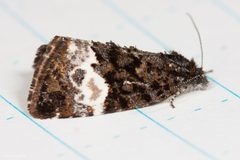
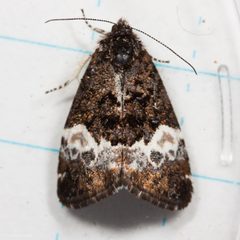
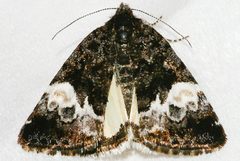
Annaphila diva is a of owlet moth in the Noctuidae, commonly known as the white annaphila. It is found in North America and is distinguished by striking black-and-white wing coloration. The species is notable for being a day-flying , an uncommon trait among Noctuidae. Larvae feed on miner's lettuce (Claytonia perfoliata), a plant relationship that has been documented. The species was first described by Grote in 1873 and is assigned MONA/Hodges number 9869.
Pronunciation
How to pronounce Annaphila diva: /ænəˈfaɪlə ˈdiːvə/
These audio files are automatically generated. While they are not always 100% accurate, they are a good starting point.
Identification
can be distinguished from similar Annaphila by the specific pattern of white markings on black forewings combined with white hindwings bordered in black. The day-flying habit may aid in field identification. Larvae are recognized by brown ground color with dark bands, spots, and white stripes.
Images
Appearance
have forewings that are black with white markings. Hindwings are white bordered with black. Larvae are brown with dark bands and spots and white stripes.
Distribution
North America. Specific range details within this region are not well documented in available sources.
Diet
Larvae feed on miner's lettuce (Claytonia perfoliata). feeding habits are not documented.
Host Associations
- Claytonia perfoliata - larval plantcommonly known as miner's lettuce
Behavior
are day-flying, an unusual for a noctuid .
Similar Taxa
- Annaphila astrologaAnother day-flying Annaphila in the same , but distinguished by different wing pattern and plant (whispering bells, Emmenanthe penduliflora)