
Raphia frater
Grote, 1864
brother moth, brother
Species Guides
6Raphia frater, commonly known as the brother , is a noctuid moth distributed across forested regions of North America. have a wingspan of 38–44 mm and are active from spring through summer. The species exhibits considerable geographic variation, with multiple described reflecting this diversity. Larvae feed primarily on aspen and related woody plants.
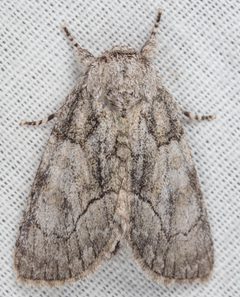
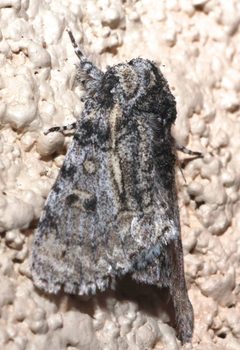
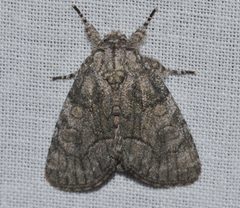
Pronunciation
How to pronounce Raphia frater: //ˈɹeɪ.fi.ə ˈfɹeɪ.tɚ//
These audio files are automatically generated. While they are not always 100% accurate, they are a good starting point.
Identification
The is recognized by its moderate size (wingspan 38–44 mm) and forested across northern North America. Identification to level requires geographic context and examination of subtle morphological differences; several western and southern were historically confused with closely related species. The subspecies R. f. abrupta occurs in Maryland, Oklahoma, and Texas; R. f. cinderella in central and southern California west of the Sierra Nevada; R. f. coloradensis in mountainous regions from British Columbia to Colorado and Utah; R. f. elbea from southeastern Utah and western New Mexico through Arizona into northern Mexico; and R. f. piazzi in central and southern Texas.
Images
Habitat
Forested regions, including and temperate forests. Larval plants (aspen, alder, birch, cottonwood, willow) indicate association with riparian and wetland woodlands as well as upland forest edges.
Distribution
Nova Scotia westward across forested Canada to British Columbia; south to Mississippi in the east. Southern limits in the west remain uncertain due to taxonomic confusion with related . Specific occupy restricted ranges: R. f. frater in Prairie Provinces, east of Great Lakes to Pennsylvania, Ohio, Indiana, and Pacific Northwest mountain ranges; R. f. abrupta in Maryland, Oklahoma, Texas; R. f. cinderella in California west of Sierra Nevada; R. f. coloradensis in mountains from British Columbia to Colorado, Utah, and southern Alberta; R. f. elbea from Utah, New Mexico, Arizona to northern Mexico; R. f. piazzi in central and southern Texas.
Seasonality
are active from April or May through August. One or two occur per year depending on location.
Diet
Larvae feed primarily on aspen (Populus tremuloides), with additional records from alder (Alnus), birch (Betula), cottonwood (Populus), and willow (Salix). feeding habits are not documented.
Host Associations
- Populus tremuloides - larval food plantprimary
- Alnus - larval food plantsecondary
- Betula - larval food plantsecondary
- Populus - larval food plantcottonwood , secondary
- Salix - larval food plantsecondary
Life Cycle
One or two per year. stage not specified in available sources. Larval development occurs on trees; details are not documented.
Ecological Role
Larval herbivore on deciduous trees and shrubs; contributes to nutrient cycling in forest through leaf consumption. Specific ecological interactions beyond herbivory are not documented.
Human Relevance
No significant documented impacts. Not known as an agricultural or forestry pest. The "brother " reflects vernacular naming tradition rather than cultural significance.
Similar Taxa
- Raphia piazziFormerly treated as a (R. f. piazzi) but may represent a distinct ; occurs in central and southern Texas where identification requires careful examination
- Other Raphia speciesWestern of R. frater have been historically confused with several closely related or forms, necessitating expert identification in this region
More Details
Subspecies complexity
The exhibits extensive geographic variation with seven described , reflecting both latitudinal and elevational differentiation across North America. Some southern and western may warrant species-level recognition pending further study.
Taxonomic uncertainty
The southern limits of the in western North America remain poorly defined due to confusion with closely related , suggesting that current distribution maps may under- or overestimate true range.