
Polychrysia
Hübner, 1821
Golden Plusia
Species Guides
2- Polychrysia esmeralda(delphinium leaftier)
- Polychrysia morigera(disjunct looper)
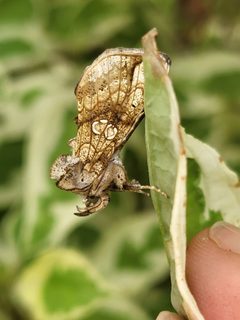
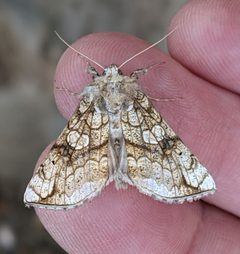
Polychrysia is a of owlet moths in the Noctuidae, established by Hübner in 1821. The genus includes nine described , with Polychrysia moneta (Golden Plusia) being the most studied due to its sequence. Members occur across the Holarctic region, with records from Europe, Asia, and North America. The genus is characterized by distinctive golden-yellow forewing coloration in .

Images
Habitat
Montane and riparian including riparian forests, ravine woodlands, and alpine forb ; some occur in gardens near woodland. Elevation range extends above 2,000 m in alpine zones.
Distribution
Russia, Canada, USA, Europe, and East Asia. European records confirmed from Denmark, Norway, and Sweden.
Host Associations
- Aconitum vulparia - larval
- Aconitum variegatum - larval
- Aconitum napellus - larval
Life Cycle
Overwinters as early instar larva. Larval period typically late April/May to late June/July in alpine . period mainly July to August, with occasional records in late June or September.
Behavior
of P. moneta display distinctive broad golden-yellow forewings with fine patterning and a large kidney-shaped mark edged in silvery white. has prominent fan-like tufts. Gold coloration varies individually from paler greyer to darker browner tones.
Ecological Role
Local declines have been linked to dark even-aged conifer or dense beech/maple plantations in riverine and ravine forests, which reduce suitable -plant stands.
More Details
Genome assembly
-level assembly available for Polychrysia moneta (haplotypes 430.64 Mb and 425.60 Mb), with haplotype 1 scaffolded into 31 chromosomal pseudomolecules including the Z . Assembly quality QV 63.8–66.1; 98.46% of haplotype 1 assigned to chromosomal-level scaffolds. Specimen from Unterschächen, Switzerland (1,053 m elevation).