
Notioplusia illustrata
(Guenée, 1852)
notioplusia moth
Notioplusia illustrata, commonly known as the notioplusia , is a noctuid moth first described by Achille Guenée in 1852. Native to the Caribbean, Florida, and the Americas, it has been introduced to Australia and South Africa, where its larvae feed on camara leaves. The has been utilized as a agent for this plant.
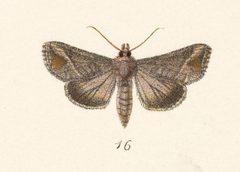
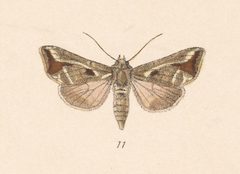
Pronunciation
How to pronounce Notioplusia illustrata: //noʊti.oʊˈpluːzɪə ɪˈlʌstreɪtə//
These audio files are automatically generated. While they are not always 100% accurate, they are a good starting point.
Identification
The may be confused with Autoplusia egena, a related plusiine with which it shares similar wing patterns and geographic range. Distinguishing features between these require examination of genitalia or detailed wing pattern analysis.
Images
Distribution
Native to Saint Kitts, the Greater Antilles (Cuba, Jamaica, Haiti, Puerto Rico), Florida, Mexico, Panama, and South America. Introduced to Australia and South Africa.
Diet
Larvae feed on leaves of camara.
Host Associations
- Lantana camara - larval food plantprimary ; basis for introductions
Ecological Role
In introduced ranges (Australia, South Africa), the functions as a agent targeting the weed camara.
Human Relevance
Intentionally introduced to Australia and South Africa for of camara, an plant . The is not known to impact native flora in these regions.
Similar Taxa
- Autoplusia egenaOverlapping geographic distribution and similar wing patterns in the Plusiinae ; requires detailed examination to distinguish
More Details
Taxonomic Note
The has been treated under the Autoplusia in some sources (as Autoplusia illustrata), though current classification places it in Notioplusia.
Introduction History
Deliberate introduction to Australia and South Africa occurred as part of programs targeting camara, with establishment confirmed in both regions.