
Sympistis dentata
Grote, 1875
Toothed Apharetra Moth, Blueberry Sallow
Sympistis dentata is a noctuid described by Augustus Radcliffe Grote in 1875. It occurs across northern North America from Yukon and the Northwest Territories to Newfoundland, extending south to New Jersey in the eastern United States. The is listed as threatened in Connecticut. Larvae feed on Vaccinium and Kalmia polifolia.
Pronunciation
How to pronounce Sympistis dentata: /sɪmˈpɪs.tɪs dɛnˈtɑː.tə/
These audio files are automatically generated. While they are not always 100% accurate, they are a good starting point.
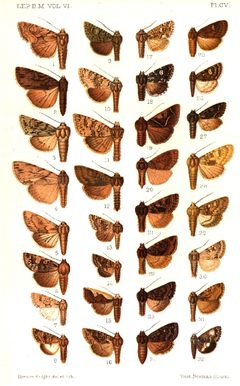
Images
Distribution
Yukon, Northwest Territories, British Columbia, Newfoundland, northern United States; south to New Jersey in the east. Listed as threatened in Connecticut.
Diet
Larvae feed on Vaccinium and Kalmia polifolia.
Host Associations
- Vaccinium - larval food plant
- Kalmia polifolia - larval food plant
Human Relevance
Listed as threatened in the US state of Connecticut.
More Details
Common Name Usage
The has been referred to by two : 'toothed apharetra ' (per Wikipedia) and 'Blueberry Sallow' (per iNaturalist). The latter name likely derives from the larval association with Vaccinium (blueberries/cranberries).