
Xanthia
Ochsenheimer, 1816
Species Guides
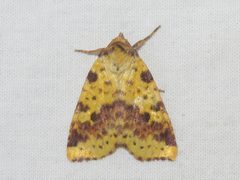
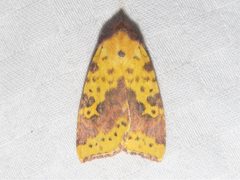
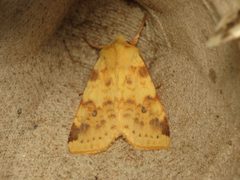
1- Xanthia tatago(pink-barred sallow)
Xanthia is a of noctuid with broad Palaearctic distribution. The genus includes such as Xanthia icteritia (Sallow moth), which has been subject to genomic study and monitoring. British populations of at least one species have declined severely (81% from 1970–2016). The genus is taxonomically close to Cirrhia, with some historical uncertainty between the two.
Pronunciation
How to pronounce Xanthia: //ˈzænθiə//
These audio files are automatically generated. While they are not always 100% accurate, they are a good starting point.
Images
Habitat
Woodlands, heathlands, and marsh-like in Britain. Specific habitat preferences for other in the are not well documented.
Distribution
Palaearctic realm: northern Europe, east Asia including Japan and Korea, recently recorded in Jammu and Kashmir region of India at 1600 m elevation. GBIF records also indicate presence in Denmark, Norway, Sweden, and Vermont, USA.
Seasonality
of at least one (X. icteritia) usually fly in autumn, with later periods in southern parts of the range.
Diet
Larvae of X. icteritia initially feed on catkins of sallow (Salix spp.), later transitioning to herbaceous plants. They consume all parts of both male and female inflorescences.
Host Associations
- Salix sp. - larval sallow
- Salix miyabeana Seemen - larval preferred
Life Cycle
Larvae feed on plant catkins before moving to herbaceous plants. emerge in autumn.
Behavior
Larvae of X. icteritia share inflorescence resources with five other insect and consume more catkin resources than potential competitors. Larvae prefer Salix miyabeana over other Salix species.
Human Relevance
Subject of genomic research; assembly of X. icteritia published (664.6 Mb, 31 chromosomal pseudomolecules). British have been monitored for conservation purposes due to severe decline.
Similar Taxa
- CirrhiaHistorical taxonomic uncertainty between Xanthia and Cirrhia; some have been moved between
More Details
Genomic data
assembly of X. icteritia from male specimen: 664.6 Mb, 31 chromosomal pseudomolecules (29 + Z ), mitochondrial genome 15.58 kb, 18,792 protein-coding genes. Specimen from Beinn Eighe National Nature Reserve, Scotland, UK.
Population decline
British of X. icteritia declined by 81% between 1970 and 2016 according to monitoring data.