
Metaxaglaea inulta
(Grote, 1874)
Unsated Sallow, Arrowwood Sallow
Metaxaglaea inulta, known as the unsated sallow or arrowwood sallow, is a noctuid native to eastern North America. fly in late autumn, with activity extending unusually late into the year. The is tightly associated with Viburnum plants, from which one of its derives.
Pronunciation
How to pronounce Metaxaglaea inulta: //ˌmɛtək.səˈɡliː.ə ɪˈnʌl.tə//
These audio files are automatically generated. While they are not always 100% accurate, they are a good starting point.
Identification
Late-season period (August–November, occasionally to January) distinguishes this from most sympatric Noctuidae. Association with Viburnum plants supports identification. Similar Metaxaglaea species may overlap in range but differ in or host use.
Images
Appearance
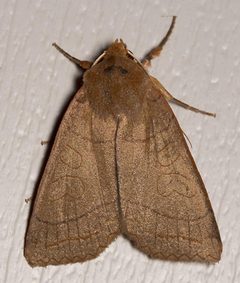
Wingspan 40–48 mm. Forewings are dull gray-brown with indistinct patterning; hindwings are paler. Overall coloration is cryptic, typical of autumn-active noctuids.
Habitat
containing Viburnum , including forest edges, shrublands, and suburban areas where arrowwood and related viburnums grow.
Distribution
Eastern North America: Nova Scotia south to North Carolina, west to Missouri, north to Manitoba and Saskatchewan.
Seasonality
active late August through November; occasional records to January. with autumn-emerging adults.
Diet
Larvae feed on leaves of Viburnum , specifically Viburnum dentatum, V. lentago, and V. . diet unknown.
Host Associations
- Viburnum dentatum - larval arrowwood
- Viburnum lentago - larval
- Viburnum lantana - larval wayfaring tree
Life Cycle
Larvae develop on Viburnum foliage. occurs in soil or leaf litter. emerge in late summer and autumn; laid on or near plants. stage not explicitly documented in sources.
Behavior
are and attracted to light. Extended period into winter months is notable for a temperate noctuid.
Ecological Role
Larval herbivore on Viburnum shrubs; contributes to autumnal nutrient cycling through leaf herbivory.
Human Relevance
Occasional minor pest of ornamental Viburnum . Of interest to lepidopterists due to late period.
Similar Taxa
- Metaxaglaea viaticaOverlaps in range; may differ in and precise associations, though specific distinguishing characters require examination.
- Other autumn NoctuidaeLate period shared with some Xylenini; plant specificity and geographic range help separate M. inulta.
More Details
Etymology
Specific epithet 'inulta' from Latin, meaning 'unavenged' or 'unsated'; source of 'unsated sallow'.
Taxonomic placement
Member of subtribe Xylenina within tribe Xylenini, Noctuinae. Metaxaglaea contains several North American with autumn periods.