
Homoanarta
Barnes & Benjamin, 1923
Species Guides
2Homoanarta is a of owlet moths (Noctuidae) established by William Barnes and Foster Hendrickson Benjamin in 1923. The genus contains seven described distributed in western North America. These belong to the tribe Eriopygini within the Noctuinae. Species-level and remain poorly documented.
Pronunciation
How to pronounce Homoanarta: //ˌhomoʊəˈnɑːrtə//
These audio files are automatically generated. While they are not always 100% accurate, they are a good starting point.
Identification
Members of Homoanarta can be distinguished from related Eriopygini by genitalic characters, particularly male valve structure. The genus name refers to similarities in genital to the genus Anarta. External features are not well documented in literature; dissection is likely required for reliable identification to .
Images
Distribution
Western North America, with records from the southwestern United States (Arizona, New Mexico, Texas) and adjacent Mexico. occur in arid and semi-arid regions.
Similar Taxa
- Anarta name alludes to morphological similarity in genitalia; historically confused or allied with Homoanarta
- Other Eriopygini generaRequire genitalic examination for separation; external often convergent in this tribe
More Details
Taxonomic history
The was erected specifically to accommodate previously placed in Anarta that showed distinct genital characteristics. Type species: Homoanarta falcata (Neumoegen, 1884).
Species diversity
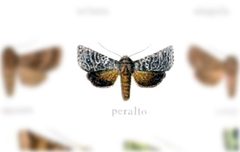
Seven are currently recognized: H. carneola, H. cristifer, H. falcata, H. farinosa, H. nudor, H. peralta, and H. senescens. Several were transferred from other upon establishment of Homoanarta.