
Spaelotis clandestina
Harris, 1841
Clandestine Dart, W-marked Cutworm
Spaelotis clandestina, known as the Clandestine Dart or W-marked Cutworm, is a noctuid with a broad transcontinental distribution across North America. are medium-sized with a wingspan of approximately 38 mm and are active from spring through fall. The larvae are feeders that have been documented as pests on cultivated and wild plants.
![Economic entomology for the farmer.. (1896) (20531811754) by Smith, John B. [from old catalog]. Used under a No restrictions license.](https://bugswithmike.nyc3.cdn.digitaloceanspaces.com/wikipedia/arthropoda/hexapoda/insecta/lepidoptera/noctuoidea/noctuidae/noctuinae/noctuini/noctuina/spaelotis/clandestina/Economic_entomology_for_the_farmer.._%281896%29_%2820531811754%29_thumbnail.jpg)
Pronunciation
How to pronounce Spaelotis clandestina: //spæˈloʊtɪs ˌklændɛsˈtaɪnə//
These audio files are automatically generated. While they are not always 100% accurate, they are a good starting point.
Identification
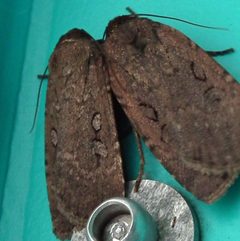
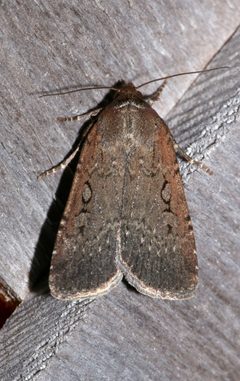
The combination of the W-shaped forewing marking and the broad transcontinental distribution across northern North America distinguishes this from many similar noctuids. The specific epithet 'clandestina' and 'Clandestine Dart' suggest cryptic coloration that may aid in concealment.
Images
Appearance
have a wingspan of approximately 38 mm. The 'W-marked Cutworm' refers to a distinctive W-shaped marking on the forewings.
Habitat
Found across a wide range of environments from coast to coast in Canada and through diverse regions of the United States including eastern deciduous forests, the Great Plains, and montane areas of the Rocky Mountains.
Distribution
Transcontinental across Canada from coast to coast, extending to southern Alaska. In the United States, occurs from Maine south to western North Carolina, west through northern Ohio to North Dakota, South Dakota, and Nebraska, and southward down the Rocky Mountains from Montana to southern Arizona.
Seasonality
are on wing from May to October, indicating a multi-month period spanning late spring through early fall.
Diet
Larvae feed on a variety of trees, shrubs, and herbaceous plants including Vaccinium, Acer, Pinus, Fabaceae, Brassica oleracea, Zea mays, Malus, and Fragaria. This broad range indicates herbivory.
Host Associations
- Vaccinium - larval food plant
- Acer - larval food plant
- Pinus - larval food plant
- Fabaceae - larval food plant
- Brassica oleracea - larval food plant
- Zea mays - larval food plant
- Malus - larval food plant
- Fragaria - larval food plant
Ecological Role
Larvae function as herbivores. The has been documented as a pest, suggesting potential economic significance in agricultural and horticultural contexts.
Human Relevance
Larvae are recognized as pests on cultivated crops including cabbage (Brassica oleracea), corn (Zea mays), apple (Malus), and strawberry (Fragaria), as well as on various trees and shrubs.
Similar Taxa
- Other Spaelotis speciesCongeneric may share similar and require careful examination of genitalia or wing patterns for definitive identification.
- Other Noctuinae cutwormsMany Noctuinae larvae are similar feeders with overlapping ranges; the W-marked forewing pattern and specific geographic distribution help distinguish S. clandestina.
More Details
Taxonomic History
First described by Harris in 1841. The has been historically placed in the Noctuidae, Noctuinae, reflecting its classification among the owlet moths.
Observation Frequency
The has been documented in 1,867 iNaturalist observations, indicating it is relatively well-recorded by citizen scientists across its range.